
More information
Colorimetric study
Color is more than just a visual feature—it’s an integral part of the consumer experience and plays a critical role in shaping perceptions of your cosmetic products. Whether it’s skincare, makeup, or haircare, the color of a product influences its perceived quality, appeal, and effectiveness. A carefully selected color can elevate your brand, enhance user satisfaction, and even increase product loyalty.
At Btsa, we understand the power of color and appeal in cosmetics, and we’re here to ensure your formulations deliver the ideal color consistency and stability. Through our comprehensive Colorimetry Services, we help you monitor, evaluate, and improve the color quality of your products, ensuring they remain as vibrant and appealing as the day they were created.
Introducing the CIELAB Method: The Gold Standard for Color Evaluation
To provide you with the most accurate and reliable color measurements, Btsa uses the CIELAB color model, a sophisticated and internationally recognized system for color quantification. This method allows us to measure color with precision, providing a detailed profile that goes beyond mere visual assessment. With the CIELAB method, we focus on three key parameters:

- L (Lightness):* Measures the lightness of the color, ranging from black to white.
- a (Red-Green Axis):* Indicates the color range between green and red.
- b (Blue-Yellow Axis):* Indicates the color range between blue and yellow.
These parameters give a clear, numerical representation of your product’s color, which we then use to assess its consistency and stability over time.
Stability Evaluation: Preventing Color Degradation
Color stability is crucial for cosmetic products, especially those exposed to light, air, and temperature changes. Over time, exposure to these environmental factors can cause color shifts in the product, often due to oxidation, which can negatively affect both its appeal and effectiveness.
Stability Indicator:
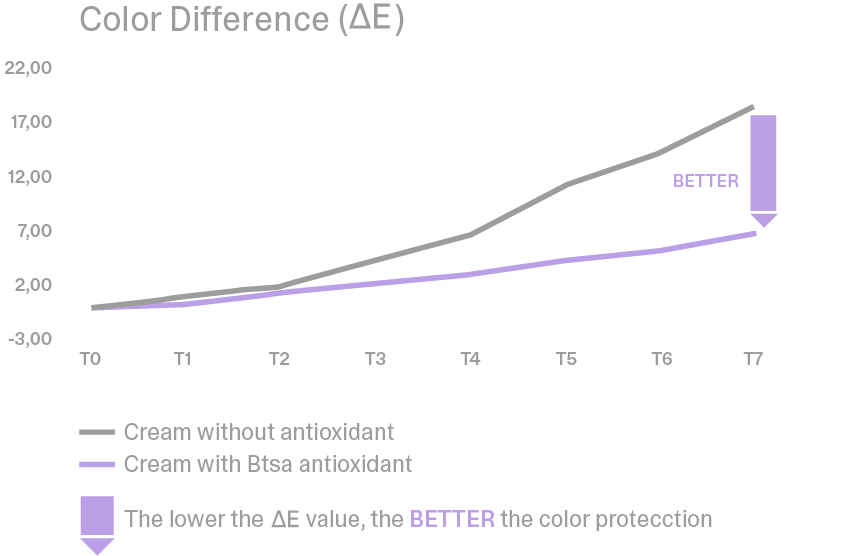
The sample is subjected to different stimuli, and the color difference (∆E) is calculated by comparing a blank sample (reference) with one that includes an antioxidant. A higher ∆E value signifies greater color instability, while a lower value indicates better color preservation.
Antioxidant Evaluation:
Through this test, Btsa examines the color changes of various ingredients or formulations over time, offering insights into the ability of our antioxidants to reduce oxidation-related color changes.
SUCCESS STORY:
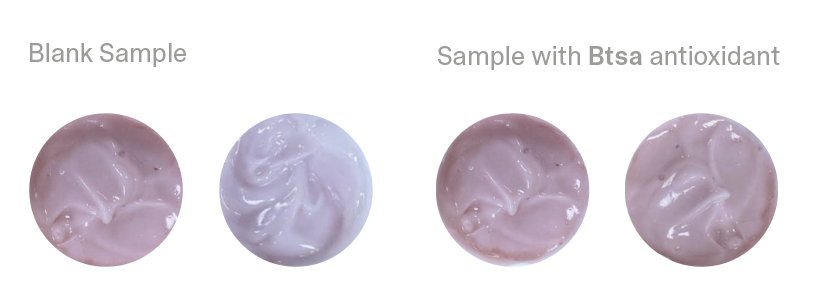
In this study, we evaluated the color stability of an emulsion containing a liposoluble active ingredient that imparted a pink tone to the formulation. Over time, exposure to sunlight caused a noticeable loss of color in the product.
To address this, Btsa‘s laboratory conducted a comprehensive analysis to assess the color protection of the formulation with and without the addition of antioxidants. The evaluation demonstrated that our antioxidant significantly delayed the degradation of the pink tone over time, offering an effective solution for enhancing the color stability of light-sensitive formulations.
Achieve Consistency, Stability, and Appeal
With Btsa’s Colorimetry Services, you don’t just measure color—you actively ensure that your products deliver the desired color experience for your customers every time. From initial development to market release, our expert team provides continuous support, helping you create high-quality cosmetic formulations that meet and exceed consumer expectations.
Don’t leave the success of your products to chance—trust Btsa for precise color measurement, reliable stability analysis, and tailored solutions to bring your cosmetic formulations to life with perfect color consistency.
Contact us today to learn more about how our Colorimetry Services can elevate your products!