
Nutrabiol® Grapeseed: Advanced Botanical Support for Cardiovascular Health
More information
1. Cardiovascular Disease: Market Burden & Global Impact
Cardiovascular diseases (CVDs) remain the leading cause of mortality worldwide, accounting for approximately one-third of all global deaths and representing a continuously expanding public health and economic burden.¹
The increasing prevalence of aging populations, sedentary lifestyles, obesity, and metabolic syndrome has significantly accelerated the incidence of cardiovascular disorders across both developed and emerging markets.²
From a market perspective, the cardiovascular health sector continues to grow, driven by increasing demand for preventive healthcare solutions, nutraceutical interventions, and functional ingredients targeting long-term risk management.³
Within this landscape, oxidative stress, endothelial dysfunction, and impaired vascular regulation are consistently identified as central biological drivers of disease progression and key targets for nutritional modulation.⁴
As a result, botanical extracts rich in bioactive polyphenols are gaining strong scientific and commercial relevance due to their multifunctional role in supporting vascular health and cardiometabolic balance.⁵
2. Functional Ingredients for Cardiovascular Health
Functional ingredients are increasingly integrated into cardiovascular health formulations due to their ability to act on multiple biological pathways simultaneously.
These include antioxidant defense systems, endothelial function support, inflammation modulation, and vascular tone regulation.
Botanical extracts rich in polyphenols are particularly relevant, as they offer a natural, multi-targeted approach to supporting circulatory health and long-term cardiovascular resilience.⁶
Within nutraceutical innovation, there is a clear shift toward evidence-based, clean-label, plant-derived ingredients that address early-stage cardiovascular risk factors.
3. Grape Seed Extract & OPC Mechanism of Action
Grape seed extract is a standardized source of oligomeric proanthocyanidins (OPCs), a class of highly bioactive polyphenols with strong antioxidant capacity.
OPCs play a key role in neutralizing reactive oxygen species (ROS), which are directly involved in endothelial dysfunction and vascular impairment.⁷
Mechanistically, OPCs contribute to cardiovascular health through multiple pathways:
- Enhancement of nitric oxide bioavailability
- Reduction of oxidative stress in vascular tissues
- Support of endothelial function integrity
- Improvement of vascular elasticity and microcirculation
These combined mechanisms position grape seed extract as a multifunctional botanical ingredient for cardiovascular applications.⁸
4. Clinical Evidence
- Blood Pressure: A Key Cardiovascular Risk Factor
Elevated blood pressure is one of the most significant and modifiable risk factors for cardiovascular disease, strongly associated with stroke, myocardial infarction, and renal complications.⁹
It is particularly prevalent in individuals with prehypertension, metabolic syndrome, and early endothelial dysfunction.¹⁰
Clinical research consistently demonstrates that even modest reductions in systolic and diastolic blood pressure can significantly reduce long-term cardiovascular risk, making blood pressure management a primary target in both pharmacological and nutritional strategies.¹¹
Clinical Evidence – Blood Pressure Modulation
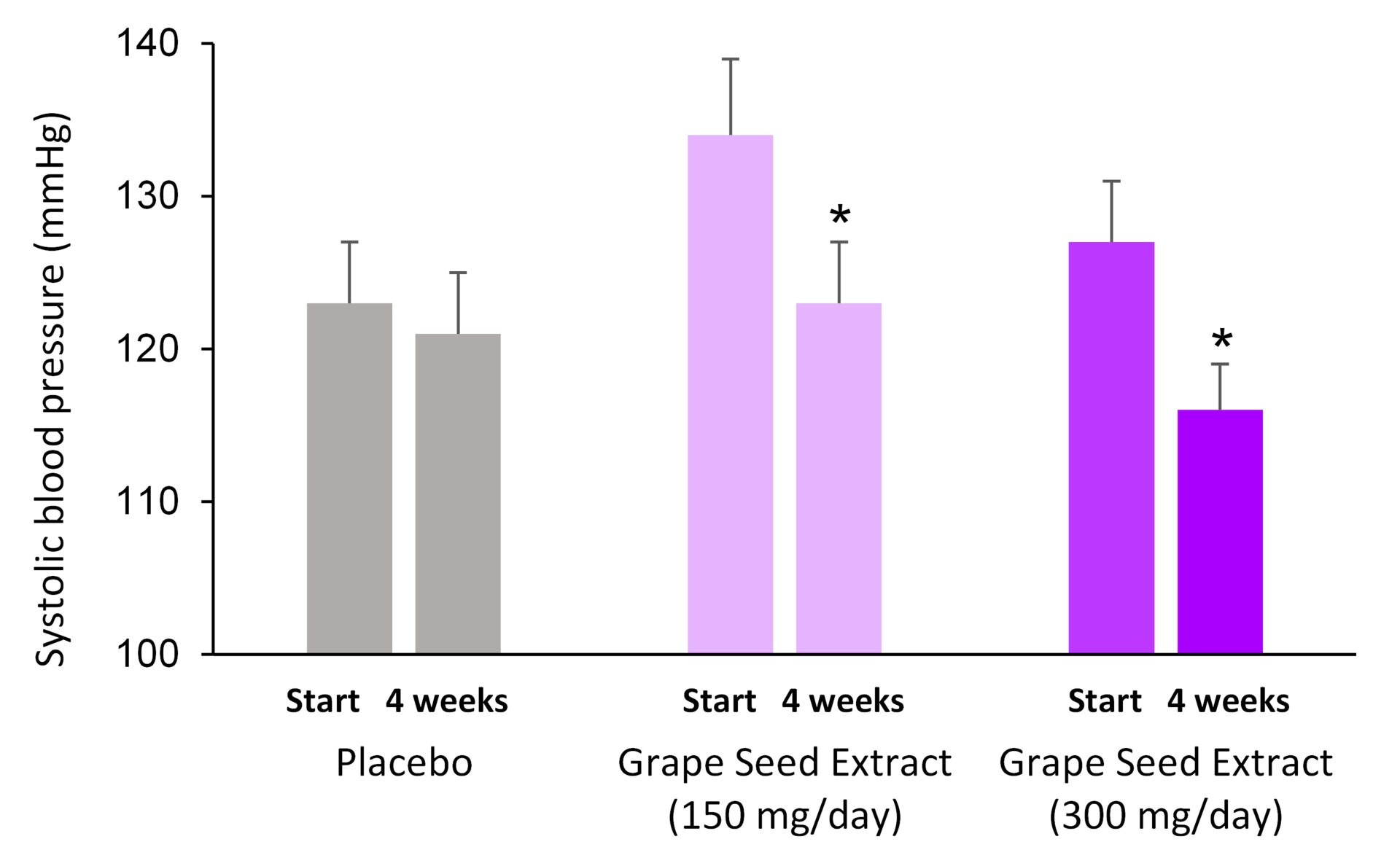
A randomized, double-blind, placebo-controlled clinical trial (Sivaprakasapillai et al.) evaluated grape seed extract (GSE) in subjects with metabolic syndrome. Participants received 150 mg or 300 mg daily for 4 weeks.
Results showed significant reductions in systolic and diastolic blood pressure compared with placebo, supporting a potential role of grape seed polyphenols in blood pressure modulation.¹²
Meta-analytical evidence further supports these findings, indicating that grape seed extract supplementation is associated with statistically significant reductions in systolic blood pressure across multiple clinical studies.¹³
A
B
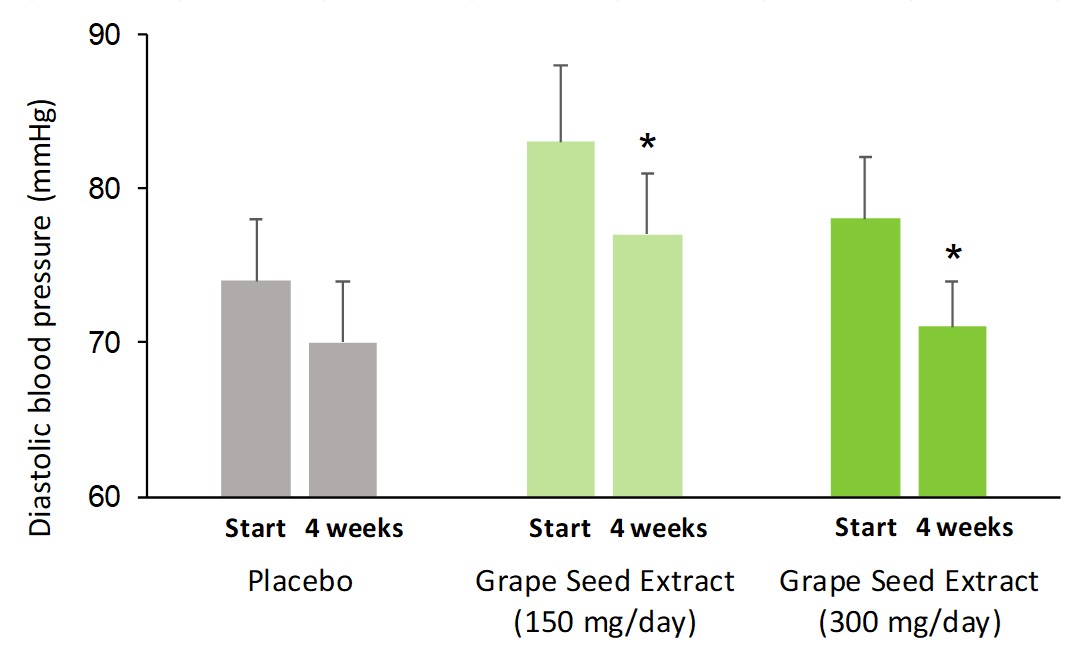
Figure 1. Systolic (A) and diastolic (B) blood pressure (mmHg) at baseline and after 4 weeks of intervention in three groups: placebo, grape seed extract (150 mg/day), and grape seed extract (300 mg/day). Data are presented as mean ± SD. *p < 0.05 compared with baseline within each group. Graphs based on data from Sivaprakasapillai et al. (Effect of grape seed extract on blood pressure in subjects with the metabolic syndrome).
- Clinical Vascular Events: Long-Term Cardiovascular Outcomes
Carotid atherosclerosis is strongly associated with increased risk of major cardiovascular events, including myocardial infarction, stroke, transient ischemic attacks, and revascularization procedures.¹⁴
These events reflect progressive vascular damage driven by chronic inflammation, oxidative stress, and endothelial dysfunction.
Targeting these underlying mechanisms through nutritional intervention may contribute to improved long-term cardiovascular outcomes.
Clinical Evidence – Vascular Outcomes
A 2-year clinical study (Cao et al.) evaluated grape seed extract (240 mg/day) in patients with carotid atherosclerosis.
The treatment group showed a lower incidence of clinical vascular events compared with the control group over the study period, suggesting a potential protective effect on vascular outcomes.¹⁵
Although further large-scale studies are required, these findings reinforce the potential role of grape seed polyphenols in long-term cardiovascular risk management.
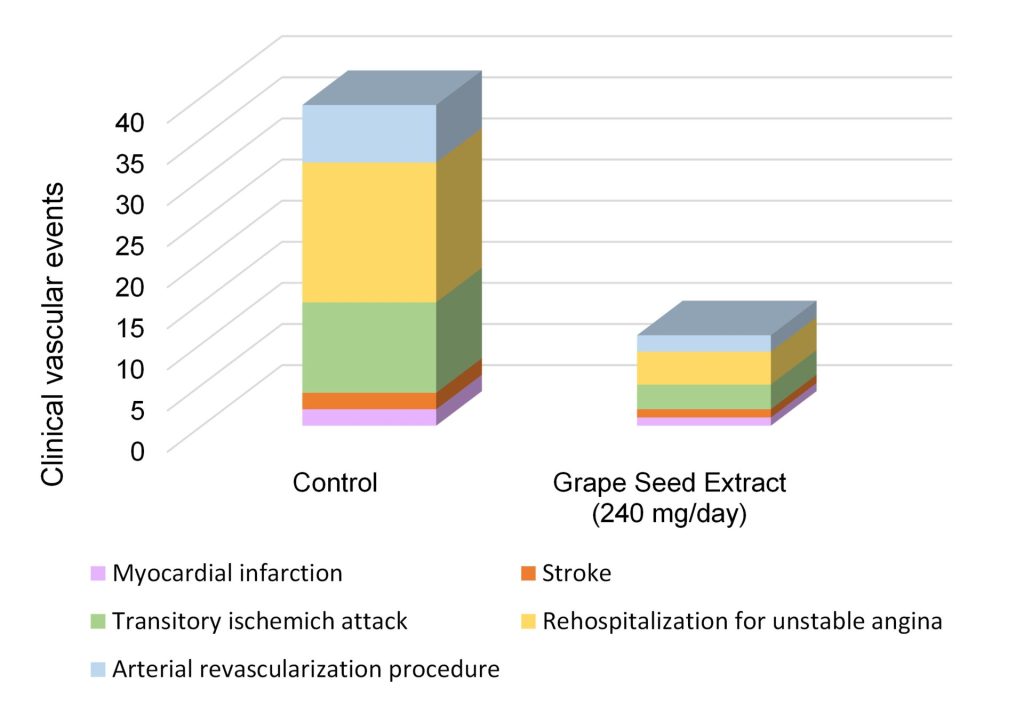
Figure 2. Comparison of the number of clinical vascular events between the control group and the group treated with grape seed extract (240 mg/day) over a 2-year period. Data are presented as n. Graph based on data from Cao et al. (Beneficial clinical effects of grape seed proanthocyanidin extract on the progression of carotid atherosclerotic plaques).
Nutrabiol® Grapeseed
At BTSA, we offer Nutrabiol® Grapeseed, a premium natural extract derived from white grape seeds, standardized in oligomeric proanthocyanidins (OPCs).
It is designed to support cardiovascular health through multiple complementary mechanisms, including antioxidant protection, vascular function maintenance, and blood pressure support.
Backed by scientific evidence and developed for high-performance nutraceutical applications, Nutrabiol® Grapeseed represents a robust botanical solution for cardiovascular health formulations targeting prevention and long-term vascular wellness.
Product Benefits
- Blood pressure support
- Vascular function support
- Endothelial health support
- High OPC standardization
- Potent antioxidant activity
Cardiovascular diseases remain a dominant global health and economic burden, driven by interconnected mechanisms including hypertension, endothelial dysfunction, and oxidative stress.
Botanical polyphenols, particularly OPC-rich grape seed extracts, demonstrate strong potential in modulating these pathways and supporting vascular health.
Nutrabiol® Grapeseed represents a science-backed, multifunctional ingredient designed for next-generation cardiovascular health formulations.
The ingredients described herein are not intended to diagnose, treat, cure, or prevent any disease. Customers are solely responsible for regulatory compliance, product claims, and the lawful use and marketing of finished products containing these ingredients.
References
1. World Health Organization. Cardiovascular diseases fact sheet. WHO.
2. Roth, Gregory A., George A. Mensah, and Valentin Fuster. “The global burden of cardiovascular diseases and risks: a compass for global action.” Journal of the American College of Cardiology 76.25 (2020): 2980-2981. doi.org/10.1016/j.jacc.2020.11.021
3. Industry reports: Cardiovascular health nutraceutical market 2023–2025.
4. Soehnlein, Oliver, and Peter Libby. “Targeting inflammation in atherosclerosis—from experimental insights to the clinic.” Nature reviews Drug discovery 20.8 (2021): 589-610.
5. Rauf, Abdur, et al. “Proanthocyanidins: A comprehensive review.” Biomedicine & Pharmacotherapy 116 (2019): 108999. doi.org/10.1016/j.biopha.2019.108999
6. Feringa, Harm HH, et al. “The effect of grape seed extract on cardiovascular risk markers: a meta-analysis of randomized controlled trials.” Journal of the American Dietetic Association 111.8 (2011): 1173-1181. doi.org/10.1016/j.jada.2011.05.015
7. Nie, Fanxuan, et al. “Oligomeric proanthocyanidins: an updated review of their natural sources, synthesis, and potentials.” Antioxidants 12.5 (2023): 1004. doi.org/10.3390/antiox12051004
8. Yamagata, Kazuo. “Polyphenols regulate endothelial functions and reduce the risk of cardiovascular disease.” Current pharmaceutical design 25.22 (2019): 2443-2458. doi.org/10.2174/1381612825666190722100504
9. Anyaogu, Christy N., et al. “Impact of Blood Pressure Control on Stroke and Myocardial Infarction Risk in Hypertensive Patients with and without Diabetes: A Narrative Review.” Cureus 17.7 (2025). doi.org/10.7759/cureus.88984
10. Sivaprakasapillai, Brahmesh, et al. “Effect of grape seed extract on blood pressure in subjects with the metabolic syndrome.” Metabolism 58.12 (2009): 1743-1746. doi.org/10.1016/j.metabol.2009.05.030
11. Ettehad, Dena, et al. “Blood pressure lowering for prevention of cardiovascular disease and death: a systematic review and meta-analysis.” The Lancet 387.10022 (2016): 957-967. doi.org/10.1016/S0140-6736(15)01225-8
12 y 13. Sivaprakasapillai, Brahmesh, et al. “Effect of grape seed extract on blood pressure in subjects with the metabolic syndrome.” Metabolism 58.12 (2009): 1743-1746. doi.org/10.1016/j.metabol.2009.05.030
14. Saba, Luca, et al. “Carotid artery atherosclerosis: mechanisms of instability and clinical implications.” European Heart Journal 46.10 (2025): 904-921. doi.org/10.1093/eurheartj/ehae933
15. Cao, Ai-Hong, et al. “Beneficial clinical effects of grape seed proanthocyanidin extract on the progression of carotid atherosclerotic plaques.” Journal of geriatric cardiology: JGC 12.4 (2015): 417.
