Protecting Natural Colors in Today’s Regulations
More information
The Regulatory Challenge: Synthetic Colorants Under Scrutiny
Across the globe, governments are tightening regulations on synthetic colorants due to growing concerns over their potential health risks, including hyperactivity in children, allergic reactions, and other long-term effects. Major markets like the EU, the US, and parts of Asia are either restricting or phasing out specific artificial dyes, forcing food manufacturers to rethink how they color their products.
These regulatory pressures are not only about compliance, they reflect a broader consumer demand for cleaner, safer, and more natural ingredients. For brands, failing to adapt can lead to lost market share and reputational risk.
The Natural Alternative: Opportunities and Challenges
Switching to natural colorants presents a promising path to meet regulatory and consumer expectations. Natural pigments, derived from plants, fruits, vegetables, and other safe sources, offer a clean-label solution that aligns with current health trends.
However, natural colorants come with inherent challenges:
- Oxidative sensitivity: natural pigments are prone to oxidation, leading to fading and instability.
- Shelf life concerns: without proper protection, products may lose their visual appeal over time.
- Formulation difficulties: achieving consistent vibrancy, intensity, and tone comparable to synthetic colorants requires specialized solutions.
How to Successfully Transition Without Compromising Performance
The key to making the switch to natural colorants lies in strategic formulation. Manufacturers need solutions that can:
- Enhance stability over time: prevent fading and maintain consistent color throughout shelf life.
- Maintain vibrancy and tone: ensure natural colors are as vivid and appealing as their synthetic counterparts.
- Support regulatory and clean-label claims: stay compliant while appealing to health-conscious consumers.
- Simplify reformulation: reduce trial-and-error in product development while protecting performance.
BTSA’s Solution: Natural Antioxidant Systems for Color Stability
At BTSA, we understand that the greatest challenge in using natural pigments is oxidative degradation, which can lead to fading, discoloration, and reduced shelf life. That’s why we’ve developed natural antioxidant systems specifically formulated to protect sensitive colorants in food products.
Our solutions are based on tocopherols, a class of naturally occurring antioxidants. Tocopherols have been extensively studied and widely recognized for their ability to:
- Neutralize free radicals, preventing oxidative reactions that degrade natural pigments.
- Preserve vibrancy and intensity of colors over time, ensuring products maintain their visual appeal.
- Improve shelf life, even under challenging storage conditions, heat, or exposure to light.
Scientific evidence supports the efficacy of tocopherols in color protection:
- Studies show that tocopherols significantly reduce the oxidation of carotenoids, anthocyanins, and other plant-based pigments.
- Tocopherols act synergistically with other natural antioxidants, enhancing overall stability and color retention.
- Their natural origin aligns perfectly with clean-label and health-conscious consumer expectations.
By incorporating BTSA’s antioxidant systems into your formulations, manufacturers can confidently transition to natural colorants without compromising performance, vibrancy, or shelf life. Our solutions make it possible to deliver visually appealing, stable, and compliant products that meet both regulatory requirements and consumer demand for natural ingredients.
Case Study: Protecting Paprika’s Natural Vibrancy
At BTSA, we studied the effectiveness of our tocopherol-based antioxidants in maintaining the vibrant color of paprika, a natural colorant highly susceptible to discoloration. Our findings demonstrated that the inclusion of these natural compounds significantly improves both the brightness and long-term stability of paprika’s color.
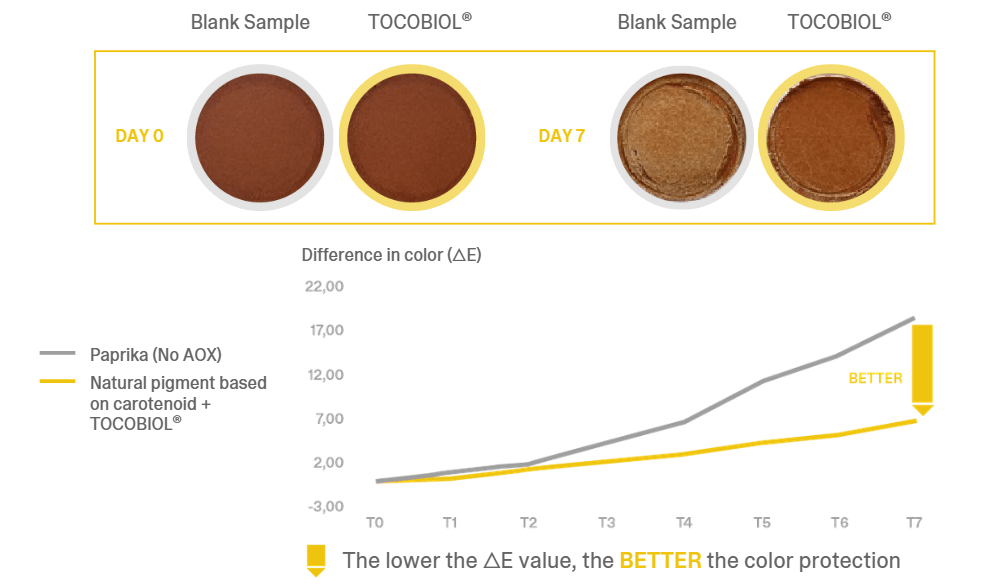
This outcome highlights the key role tocopherols play in safeguarding the visual appeal and overall sensory quality of natural ingredients, proving that natural antioxidant systems are not just effective, they are essential for modern, clean-label food products.
Why Partner with BTSA?
Transitioning to natural colorants doesn’t have to compromise product quality. With BTSA’s antioxidant solutions, brands can confidently:
- Reformulate existing products with natural colors.
- Protect their products against oxidative degradation.
- Deliver high-quality, visually appealing foods that align with consumer demands and regulatory trends.
Ready to make the switch from synthetic to natural colorants?
BTSA can help. Our team of experts provides tailored guidance and proven antioxidant solutions to ensure your natural colors remain vibrant, stable, and compliant. Contact us today to learn how we can support your product reformulation and color stabilization needs.