Stability & Taste in Traditional Fat-Rich Confectionery
More information
Preserve tradition. Innovate with nature.
Lard has been a fundamental ingredient in traditional Spanish pastries like mantecados and polvorones for centuries. Its unique fatty acid composition provides the crumbly texture, rich mouthfeel, and characteristic flavor that define these beloved confections. However, despite its culinary advantages, pork lard is highly susceptible to oxidation, especially during production, packaging, and storage.
Oxidation is a chemical reaction that occurs when fats are exposed to oxygen, heat, light, or metal ions, initiating a chain of reactions that generate free radicals and ultimately lead to lipid peroxidation. This process causes the fat to break down, producing off-flavors, rancid odors, discoloration and even nutritional degradation.
In baked goods like mantecados, which often require long shelf life and are commonly distributed at room temperature, this oxidative degradation is a critical challenge. It not only compromises the sensory qualities of the final product but also diminishes its marketability and brand reputation.
Consequences of Lard Oxidation in Traditional Pastries:
- Rancid taste and smell, leading to immediate consumer rejection
- Loss of product integrity (texture and mouthfeel deterioration)
- Shortened shelf life, limiting distribution and increasing waste
- Textural degradation Negative, including degradation of essential fatty acids
- Increased risk of recalls or complaints, especially in markets sensitive to product freshness
Historically, manufacturers have used synthetic antioxidants like BHA to delay oxidation. These compounds can slow down the degradation process, but growing concerns over their safety, along with regulatory and consumer pressure, have highlighted the need for natural and safe alternatives.
Introducing Tocobiol® – The Natural Alternative to Synthetic Antioxidants
Tocobiol®, is a powerful natural antioxidant derived from tocopherols, extracted from vegetable oils. Specifically designed to prevent lipid oxidation in high-fat food matrices, Tocobiol® offers an effective, plant-based solution to preserve lard used in traditional baked goods.
Key Benefits of Tocobiol® in Lard-Based Applications
-
Extended Shelf Life
Tocobiol® significantly delays the onset of oxidation in pork lard, maintaining the sensory properties and freshness of mantecados and polvorones for longer periods. -
Flexible Dosing
Tocobiol® range allows food manufacturers to adjust antioxidant concentration depending on fat composition and processing conditions. -
Clean-Label, Consumer-Friendly
Unlike synthetic antioxidants, Tocobiol® is a natural option and widely recognized as safe (GRAS). It aligns with the demand for cleaner, more transparent ingredient lists. -
Plant-Based & Sustainable
Derived from renewable vegetable oils, Tocobiol® supports sustainable sourcing and eco-conscious manufacturing.
Validated by Laboratory Studies: Proven Efficacy in Oxidation Control
To evaluate Tocobiol®’s performance in real-world fat applications, Btsa conducted an accelerated oxidation study using the Rancimat method, a recognized technique to simulate oxidative stress through controlled heat and airflow.
Test Conditions and Samples:
Samples of pork lard were treated with Tocobiol range antioxidants at 1000 ppm and compared to a blank sample with no antioxidant. The following test groups were analyzed:
- Pork Lard (No antioxidant)
- Pork Lard + 1000 ppm Tocobiol®
- Pork Lard + 1000 ppm Tocobiol® T50
- Pork Lard + 1000 ppm Tocobiol® T70
- Pork Lard + 1000 ppm Tocobiol® T90
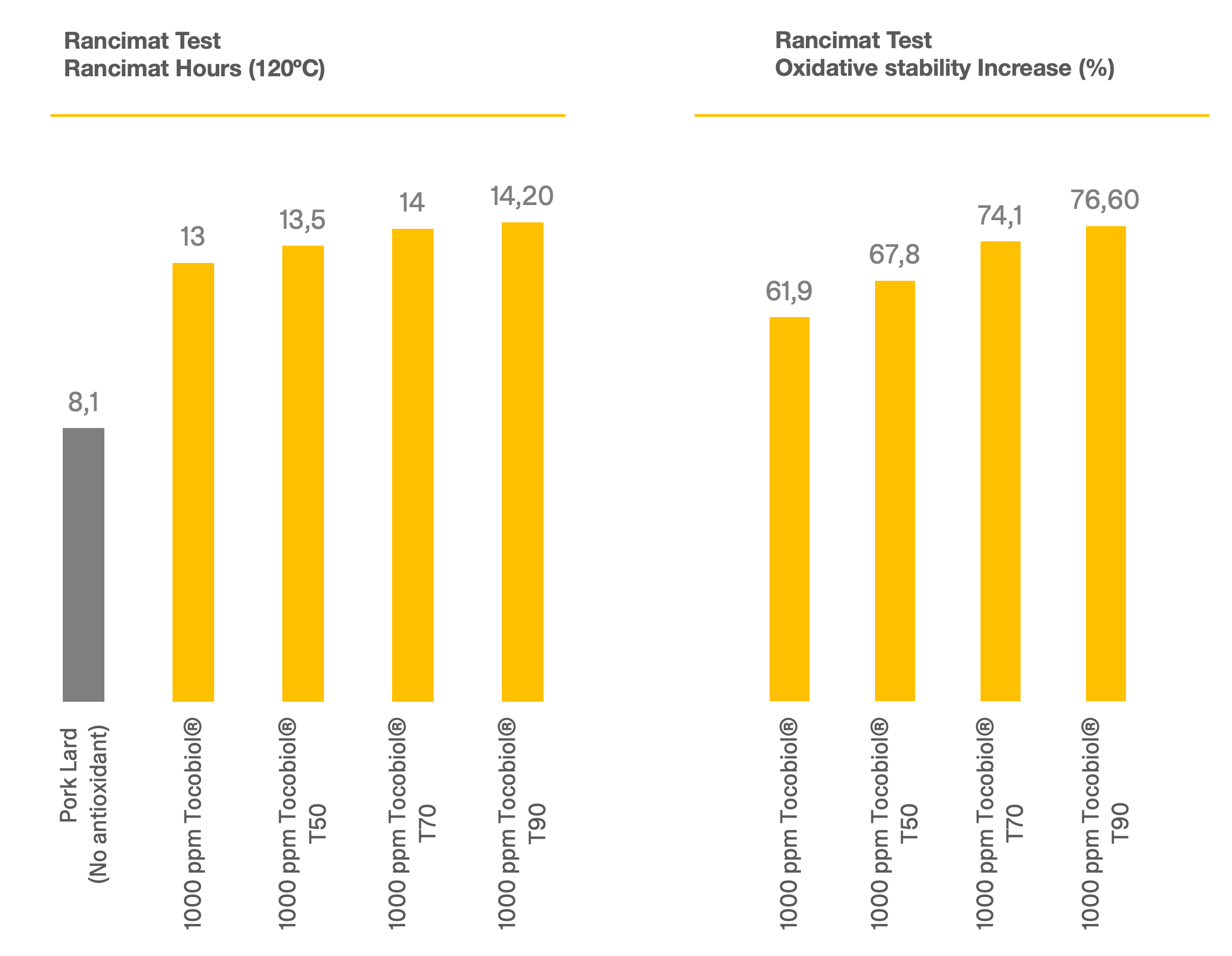
Results:
The Tocobiol®-treated samples showed a significant increase in oxidative stability, indicating strong oxidative protection compared to the control. In this way, Tocobiol® significantly delays the onset of oxidation in pork lard, maintaining the sensory properties and freshness of mantecados and polvorones for longer periods.
Contact us today for samples, technical specs, or formulation support
Whether you’re reformulating an existing product or developing a new clean-label recipe, Btsa’s team is ready to help you optimize oxidative stability with natural, plant-based antioxidants.
More information