Protect Nut & Seed Butters from Oxidation and Rancidity
More information
Nut and seed butters are a versatile and nutritious category of spreads, enjoyed globally for their rich flavor, creamy texture, and high content of essential nutrients. However, these products are inherently susceptible to oxidation due to their unsaturated fat content, which can lead to rancidity, off-flavors, color changes, and reduced shelf-life. Understanding the lipid profiles of different spreads is critical to selecting the right antioxidant strategy.
Types of Nut & Seed Spreads
1. Peanut Butter
Peanut butter is one of the most popular spreads, typically rich in monounsaturated fats (~50%) with a moderate level of polyunsaturated fats (~30%). Its lipid composition provides reasonable oxidative stability, but natural antioxidants are still needed to prevent rancidity over extended storage.
2. Almond Butter
Almond spreads contain a high proportion of monounsaturated fats (~60%) and lower polyunsaturated fat content (~25%). These spreads are slightly more stable than polyunsaturated-rich spreads but can develop off-flavors if not properly protected.
3. Hazelnut Butter
Hazelnut butter is prized for its distinctive flavor and contains a balance of monounsaturated (~80%) and polyunsaturated (~10%) fats. While more stable than sunflower or sesame spreads, it still requires antioxidant support for long shelf life.
4. Cashew Butter
Cashew spreads are rich in monounsaturated (~55%) and polyunsaturated (~30%) fats, offering a creamy texture but moderate oxidative susceptibility.
5. Sunflower Seed & Tahini Spreads
Sunflower seed butters and tahini are high in polyunsaturated fatty acids (~60–70%), which makes them particularly prone to oxidation and rancidity. These spreads benefit most from natural antioxidant solutions to maintain flavor, color, and nutritional quality.
Lipid Profile and Oxidative Risk
The susceptibility of nut and seed spreads to oxidation depends on their fatty acid composition:
- Monounsaturated fats (MUFA): moderately stable, less prone to oxidation.
- Polyunsaturated fats (PUFA): highly prone to oxidative degradation.
- Saturated fats: naturally stable, but limited in most spreads.
Spreads with higher PUFA content, such as sunflower and sesame, require more robust antioxidant strategies. Natural solutions like tocopherols are particularly effective, aligning with clean-label trends while preserving product quality.
At BTSA, we offer TOCOBIOL®
TOCOBIOL® is a natural tocopherol-based antioxidant designed to protect nut and seed butters from rancidity and oxidation. By incorporating TOCOBIOL®, you can maintain the flavor, aroma, color, and nutritional integrity of your spreads from production to consumption. Suitable for peanut, almond, hazelnut, cashew, sunflower seed, and tahini spreads, TOCOBIOL® provides clean-label protection and extends shelf-life without compromising taste or quality.
BTSA Case Study: Hazelnut & Almond Spreads
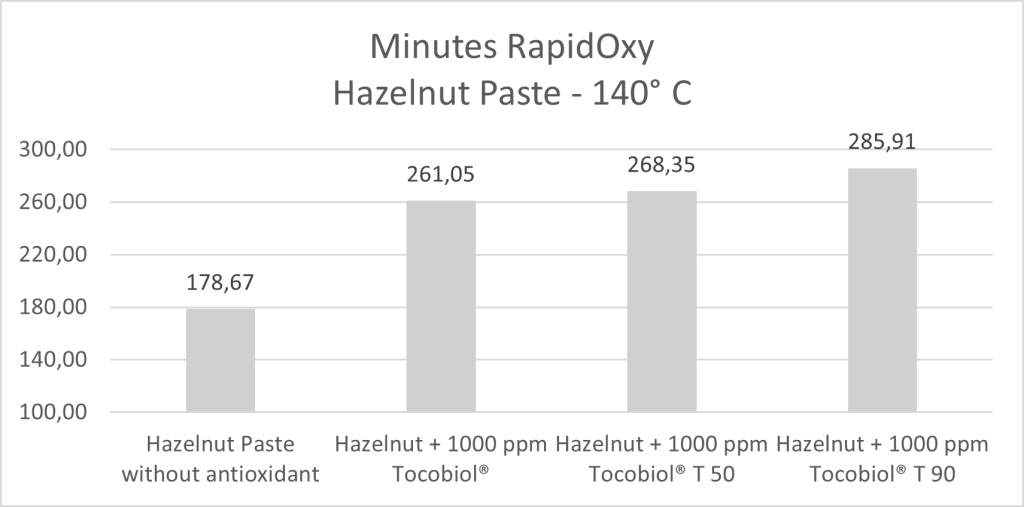
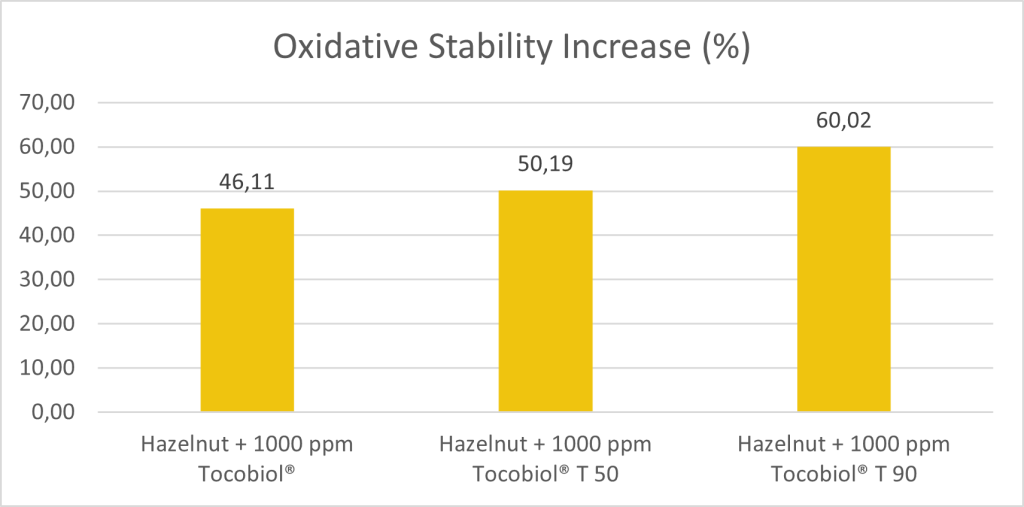
BTSA has conducted application trials to evaluate the efficacy of its antioxidant solutions in real nut butter matrices, focusing on hazelnut and almond spreads due to their high content of unsaturated fatty acids and susceptibility to oxidation.
Hazelnut paste:
Almond paste:
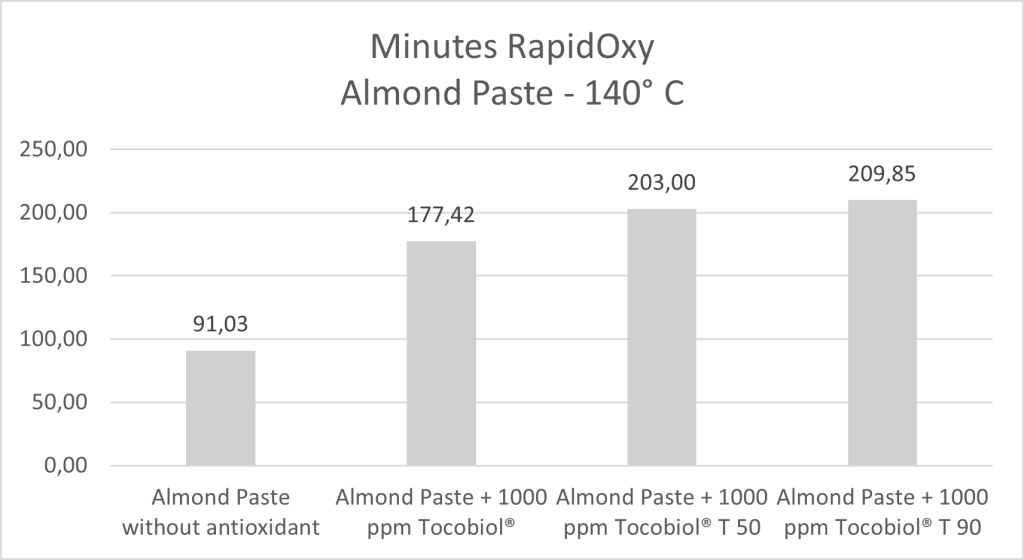
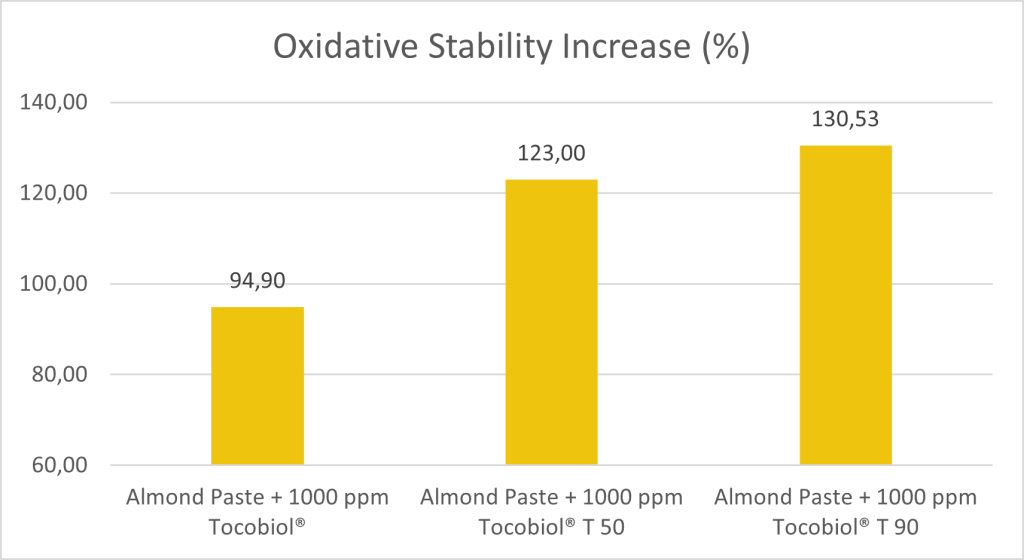
These case studies confirm the effectiveness of BTSA antioxidant solutions in protecting nut-based spreads, supporting consistent product quality across different lipid profiles while meeting clean-label and natural ingredient expectations.
Why Choose TOCOBIOL® for Your Nut & Seed Butters?
- Natural antioxidant protection
- Prevents oxidation and rancidity
- Preserves flavor and aroma
- Maintains nutritional quality
- Extends shelf-life naturally