Natural Antioxidant Solutions to Replace TBHQ in Food Applications
More information
Introduction: Market Context
Synthetic antioxidants such as TBHQ (tert-butylhydroquinone) have been widely used in the food industry for decades to control lipid oxidation in edible oils, fried snacks, bakery products, and processed foods¹. Its strong radical-scavenging capacity and cost-effectiveness made it a preferred solution in high-temperature systems.
However, the global food market is undergoing structural change. The clean-label movement, regulatory scrutiny, and increasing demand for naturally sourced ingredients are driving reformulation initiatives worldwide². In parallel, the global natural food antioxidant market continues to grow as manufacturers seek alternatives to synthetic stabilizers³.
Limitations of TBHQ
1. Thermal and Processing Constraints
Although TBHQ is considered one of the more heat-resistant synthetic antioxidants, studies show that it can partially degrade, volatilize, or lose effectiveness under prolonged frying conditions and repeated heating cycles⁴. In high-temperature matrices, oxidative stress may eventually surpass its protective capacity.
2. Consumer Perception
Synthetic antioxidants are increasingly perceived negatively by consumers. Ingredient lists containing artificial additives such as TBHQ may reduce purchase intent compared to products formulated with recognizable natural antioxidants⁵. Clean-label positioning has become a competitive advantage across snack, oil, and processed food categories.
3. Regulatory Considerations
TBHQ is permitted within strict maximum limits (typically up to 0.02% of fat or oil content depending on jurisdiction) by authorities such as the FDA and EFSA⁶ ⁷. However, regulatory oversight, labeling transparency, and shifting international policies are encouraging manufacturers to proactively transition toward naturally derived solutions.
Natural Alternatives: Mixed Tocopherols
Mixed tocopherols, natural forms of Vitamin E derived from vegetable oils, provide an effective alternative antioxidant system for lipid protection.
Tocopherols function as chain-breaking antioxidants, interrupting free radical propagation reactions in lipid oxidation processes⁸. Their efficacy is well documented in edible oils, fats, meat systems, and snack applications⁹.
Key advantages include:
- Natural origin (plant-derived)
- Positive consumer perception
- Compatibility with clean-label and organic standards
- Synergistic performance when combined with other antioxidants
- Competitive oxidative stabilization in many high-temperature systems¹⁰
When properly standardized and formulated, mixed tocopherols can effectively replace TBHQ in numerous food applications while delivering additional marketing value.
At BTSA, we offer TOCOBIOL® a natural antioxidant solution based on highly purified mixed tocopherols, specifically developed to replace synthetic antioxidants such as TBHQ in demanding food systems.
Why TOCOBIOL® Is Effective in TBHQ Replacement
- Optimized tocopherol profile for lipid matrices
- Strong radical scavenging activity
- High performance in frying oils and snacks
- Clean-label and plant-based positioning
- Compliance with global food regulations
TOCOBIOL® provides technical oxidation control while enhancing brand positioning through natural ingredient sourcing.
BTSA Case Study: TOCOBIOL® vs. TBHQ in Frying Oil Application
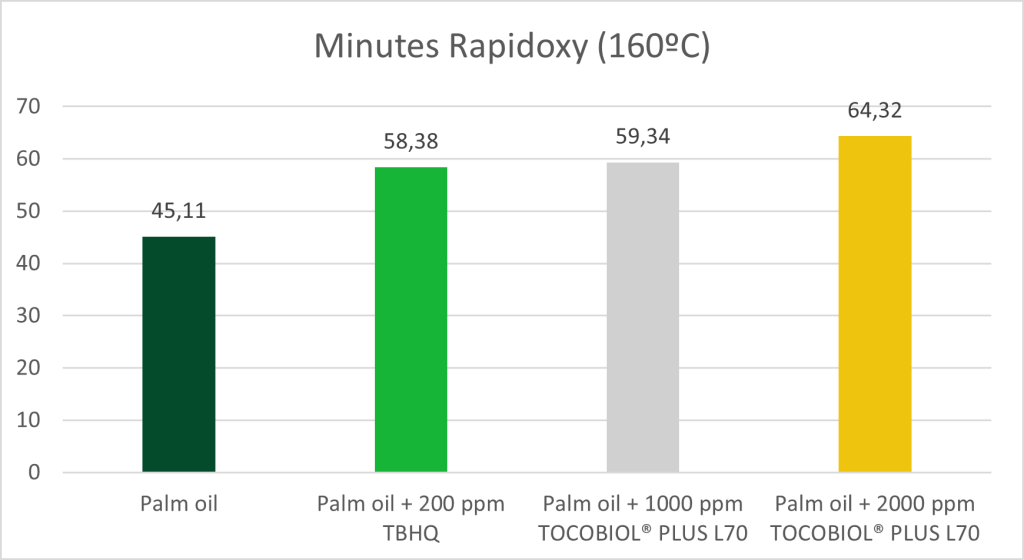
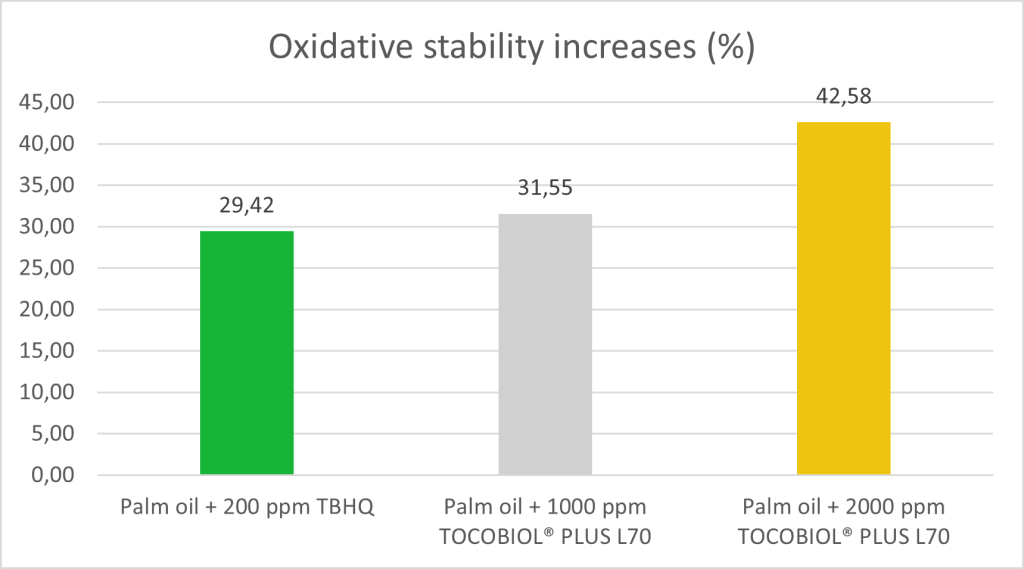
To evaluate performance under real industrial conditions, BTSA conducted a comparative oxidative stability study in palm oil subjected to continuous frying simulation at 180°C.
Conclusion of Case Study
The results confirmed that optimized tocopherol systems such as TOCOBIOL® range can provide competitive oxidative protection in high-temperature frying conditions while offering the additional benefit of natural labeling.
TOCOBIOL®
- Natural mixed tocopherols
- TBHQ replacement solution
- Frying-stable performance
- Clean label compliant
- Oxidative stability enhancement
Conclusion :The Strategic Shift Toward Natural Antioxidants
The global food industry is transitioning toward natural antioxidant systems driven by:
- Consumer demand
- Regulatory evolution
- Clean-label positioning
- Sustainable sourcing
TOCOBIOL® enables manufacturers to maintain oxidative stability in high-temperature food applications while aligning with modern market expectations.
Replacing TBHQ is no longer just a regulatory adaptation, it is a strategic upgrade.
References
- Shahidi, F., & Zhong, Y. (2010). Lipid oxidation and improving the oxidative stability. Chemical Society Reviews, 39(11), 4067–4079.
- Asioli, D., et al. (2017). Making sense of the “clean label” trends. Food Quality and Preference, 58, 1–12.
- Grand View Research. (2023). Natural Food Antioxidants Market Size Report.
- Warner, K. (2002). Effects of antioxidants on frying oil stability. Food Technology, 56(6), 60–64.
- Román, S., Sánchez-Siles, L.M., & Siegrist, M. (2017). The importance of food naturalness for consumers. Appetite, 113, 1–10.
- U.S. Food and Drug Administration (FDA). CFR Title 21 §172.185 – TBHQ regulation.
- European Food Safety Authority (EFSA). (2004). Opinion on tert-butylhydroquinone (TBHQ) as a food additive.
- Frankel, E.N. (2005). Lipid Oxidation. 2nd ed. Woodhead Publishing.
- Laguerre, M., et al. (2007). Evaluation of antioxidant properties of tocopherols. Journal of Agricultural and Food Chemistry, 55(12), 4891–4899.
- Choe, E., & Min, D.B. (2009). Mechanisms and factors for edible oil oxidation. Comprehensive Reviews in Food Science and Food Safety, 8(4), 345–358.