
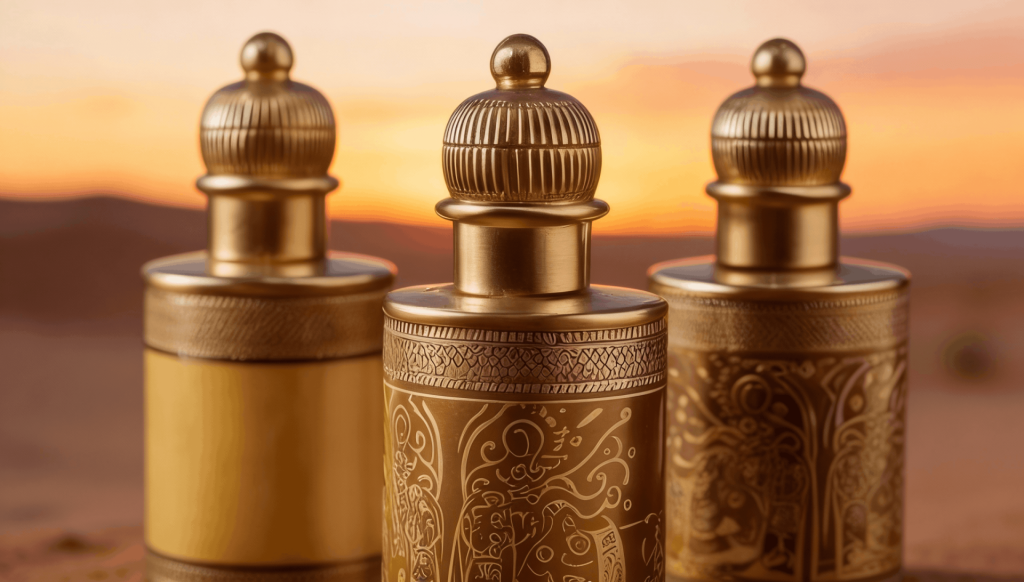
Arabian perfumes have gained remarkable visibility in the global fragrance market. Known for their intensity, depth, and exceptional longevity, these creations rely on a high concentration of essential oils that deliver a distinctive olfactory signature. Unlike many conventional fragrances, which often contain a larger proportion of alcohol and a more diluted aromatic phase, Arabian perfumes are typically oil-based or composed of highly concentrated perfume oils.
It is precisely this richness that makes them vulnerable. High oil content increases the risk of oxidation, a chemical process that gradually alters aroma, color, and overall performance.
Why Arabian Perfumes Oxidize Faster: The Hidden Risk in High-Oil Formulas
Arabian perfumes are traditionally formulated with a high percentage of aromatic and essential oils such as oud, amber, musk accords, and complex resinous notes. Their oil-based nature contributes to their strong projection and long-lasting performance on skin. However, from a chemical perspective, essential oils and aromatic compounds are sensitive substances.
Essential oils contain polyunsaturated fatty acids (PUFA) and other substances (sterols, carotenoids, xanthophylls, flavonols, monoterpenes…), mainly sensitive to oxygen, light, moisture, and heat. Specifically, monoterpenes and sesquiterpenes (such as limonene, linalool, or caryophyllene) autoxidize easily upon contact with air, forming hydroperoxides and other oxidative products that not only degrade the aromatic profile but have also been identified as frequent contact allergens in clinical studies with dermatitis patients
Typical Western Eau de Parfum are alcohol-based fragrance, and usually contains 15-20% oil, which reduces the oxidative process to some extent, while disappearing earlier from the skin. In contrast, many Arabian fragrances are either perfume oils (100% oil-based and undiluted) or extrait de Parfum (with oil concentrations above 20-30%). As a result, oxidative degradation can progress more rapidly if no protective system is in place.
Natural Doesn’t Mean Stable: The Science Behind Antioxidant Protection in Niche Perfumes
Oxidative reactions follow a chain mechanism. Once initiated, free radicals are generated. These unstable molecules react with other components, propagating a cascade of degradation reactions. Antioxidants act as stabilizing agents by interrupting this chain reaction. They donate a hydrogen atom or electron to neutralize free radicals, transforming them into more stable species and preventing further propagation. In oil-rich perfume systems, antioxidants are particularly effective when they are lipophilic and compatible with the aromatic matrix.
For niche and artisanal perfume brands, which frequently emphasize authenticity and natural sourcing, the careful selection of antioxidants is essential to maintain both product integrity and brand reputation. A stable fragrance ensures that the olfactory experience remains consistent from the first drop to the last, even after extended storage or distribution in diverse climates.
Antioxidants in Fragrance Formulation: Protecting Oil-Rich Perfumes from Degradation
The choice of an antioxidant depends on several factors: solubility, regulatory status, sensory neutrality, and compatibility with the fragrance base. For oil-based systems, lipid- soluble antioxidants are preferred because they can distribute uniformly within the oily phase and provide effective protection throughout the product.
From a technological perspective, antioxidants in perfumery function as stabilizing additives rather than as active ingredients with biological effects. Their purpose is to preserve the chemical integrity of the formulation, not to provide nutritional benefits.
In high-end Arabian perfumes, where premium oils represent a significant investment, the cost of oxidative degradation extends beyond sensory quality. It can also impact brand perception and consumer trust. Incorporating suitable antioxidants at the development stage is therefore a strategic measure to ensure long-term product performance.
How Tocopherols Preserve Fragrance Integrity in Arabian Perfume Oils
Tocopherols, commonly known as vitamin E, are among the most widely used natural antioxidants in lipid-based systems. In fragrance oils, they act as chain-breaking antioxidants that stabilize unsaturated compounds and reduce the formation of peroxides and other degradation products.
Beyond their antioxidant efficacy, tocopherols are highly compatible with oil-based systems, making them particularly suitable for Arabian perfume oils. Their lipophilic nature allows them to integrate seamlessly into concentrated aromatic blends without altering the intended scent profile.
As Arabian perfumes continue to gain global attention for their richness and longevity, formulation strategies must evolve to address the specific stability challenges associated with high-oil compositions. In this context, Btsa has developed Bioxan® , an antioxidant made from natural tocopherols, which provides an effective solution for preserving fragrance integrity and extending product shelf life. It is an excellent product for protecting Arabian perfumes against oxidation while preserving sensory and organoleptic properties.