
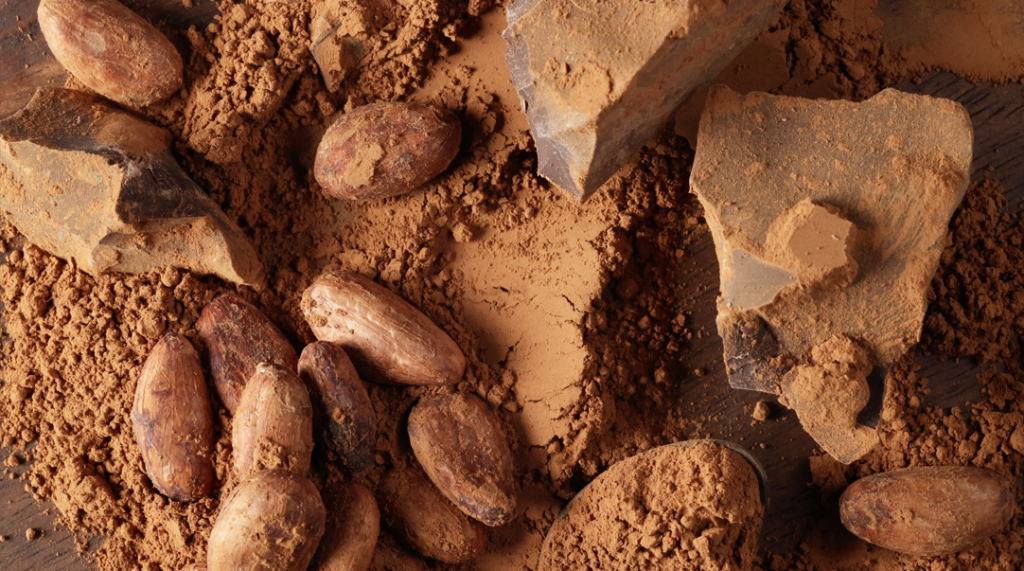
Global demand for chocolate-flavored products remains strong, with the average chocolate confectionery consumption expected to reach 1.3 kg per person in 2026 [1]. This volume contrasts with the growing fragility of cocoa supply chains. The industry faces a widening gap between market demand and raw material access.
This imbalance is accelerating changes in chocolate formulations, driving a shift toward reduced cocoa content and alternative fat systems. Behind this transition lies a less visible challenge: preserving flavour stability, product quality, and shelf life in formulations that no longer benefit from cocoa’s natural antioxidant protection.
What’s Behind the Cocoa Shortage? Market Dynamics and Regional Disruptions
The recent cocoa crisis is not the result of a single factor but of a convergence of structural and environmental pressures. West Africa, which supplies 70% of the world’s cocoa, has experienced increasingly erratic weather patterns. Prolonged droughts followed by excessive rainfall have reduced yields and increased crop vulnerability to disease.
The Climate Central report reveals that climate change added at least three weeks above 32ºC (89.6°F) annually during the main cacao crop season (October-March) in the Ivory Coast and Ghana, two weeks in Cameroon, and one week in Nigeria[2]. These temperatures are above the optimal range for cacao trees. Excessive heat can contribute to a reduction in the quantity and quality of the harvest, potentially increasing global chocolate prices and impacting local economies in West Africa.
At the farm level, the situation is equally challenging. Cocoa producers, many of whom operate with limited access to capital, technology, and agronomic support, face difficulties in adjusting to rapidly changing conditions. They rely on traditional cultivation methods to face landscapes already weakened by deforestation and soil degradation. As productivity declines and recovery options remain limited, global supply tightens.
These factors have increased cocoa prices, the main driver of chocolate costs. In 2026, prices have dropped significantly from a record peak of over US$12,000 per ton in early 2024, to US$4,000-$6,000 per ton due to improved supply. Yet they remain well above the historic $2,500 average [3].
For chocolate manufacturers, this environment has shifted cocoa from a relatively predictable raw material into a strategic risk factor. Cost pressures are no longer short-term anomalies but part of a new baseline, accelerating the move toward reformulation strategies that reduce dependence on cocoa-derived ingredients.
How Cocoa Powder Shortages Are Driving Fat Reformulation in Chocolate Products
From a structural standpoint, chocolate is a suspension of cocoa powder, sugar, and, where relevant, milk solids dispersed within a continuous fat matrix dominated by cocoa butter. This means that modifying the fat phase is one of the most effective levers for facing cocoa shortage while maintaining processability and visual quality. While this approach helps manage cost exposure, it has important technical implications. Cocoa ingredients contribute to flavor, color, and the natural chocolate antioxidant content. Lowering their inclusion weakens the product’s inherent resistance to oxidation.
Key strategies include:
- Cocoa butter equivalents (CBEs): Speciality fats engineered to closely match cocoa butter’s melting behaviour and crystallisation pattern. When properly selected, they allow partial replacement of cocoa butter while preserving snap, gloss, and mouthfeel.
- Cocoa butter substitutes (CBS), often lauric fats: Lower-cost fats such as palm kernel or coconut oil, commonly used in compound coatings. These fats can replicate certain textural attributes but differ significantly in melting profile and flavor release and are typically incompatible with traditional chocolate standards.
- Cocoa butter replacers via oleogels or emulsions: Emerging approaches that use structured oil systems to reduce total cocoa butter and saturated fat content while maintaining a continuous fat phase and acceptable sensory performance.
While these strategies offer flexibility and cost control, they also fundamentally alter the lipid composition of the product, with direct consequences for oxidative stability.
Replacing Cocoa: Formulation Challenges and Stability Issues in Chocolate Flavour Systems
As cocoa content decreases, many products move toward “chocolate flavor” positioning, relying on flavorings, colors, and modified fat blends to recreate the expected sensory profile. The primary challenge in these systems is not achieving initial flavor impact but maintaining flavor integrity over time.
Alternative vegetable fats often contain higher levels of unsaturated fatty acids, which are more prone to oxidation than cocoa butter. At the same time, the reduction of cocoa removes a significant source of natural antioxidants, including polyphenols and tocopherols. This combination increases susceptibility to lipid oxidation, leading to off-flavor development, aroma loss, and reduced shelf life, particularly under variable storage conditions.
In this context, antioxidant protection shifts from a supportive role to a central formulation requirement. Carefully designed antioxidant solutions are needed to stabilize modified fat systems, protect flavor compounds, and ensure consistent quality throughout the product’s intended shelf life.
Btsa develops tailored antioxidant solutions that address the specific challenges of reformulated chocolate and chocolate-flavor products. We offer a wide range of natural antioxidants, including natural tocopherols, specifically designed to enhance the oxidative stability of fat-based food systems. Tocobiol® is a natural antioxidant composed of tocopherols derived from non-genetically modified vegetable oil, which protects food and increases its shelf life without altering its sensory characteristics, thanks to the synergy between its active ingredients, such as tocopherols, squalene, and sterols, naturally present in the product. Tocobiol is compatible with cocoa and chocolate.
By restoring oxidative stability in low-cocoa systems, these solutions help preserve flavor, extend shelf life, and maintain product performance in an increasingly constrained cocoa market.
Sources
[1] Statista. Chocolate confectionery – worldwide revenue. [Internet] 2026 [cited 2026 Feb 6]. Available from: https://www.statista.com/outlook/cmo/food/confectionery-snacks/confectionery/chocolate-confectionery/worldwide#revenue
[2] Climate Central. Analysis: Climate change and cocoa production in 2025. [Internet] 2025 [cited 2026 Feb 6]. Available from: https://www.climatecentral.org/report/analysis-climate-and-cocoa-2025
[3] Trading Economics. Cocoa. [Internet] 2026 [cited 2026 Feb 6]. Available from: https://tradingeconomics.com/commodity/cocoa