
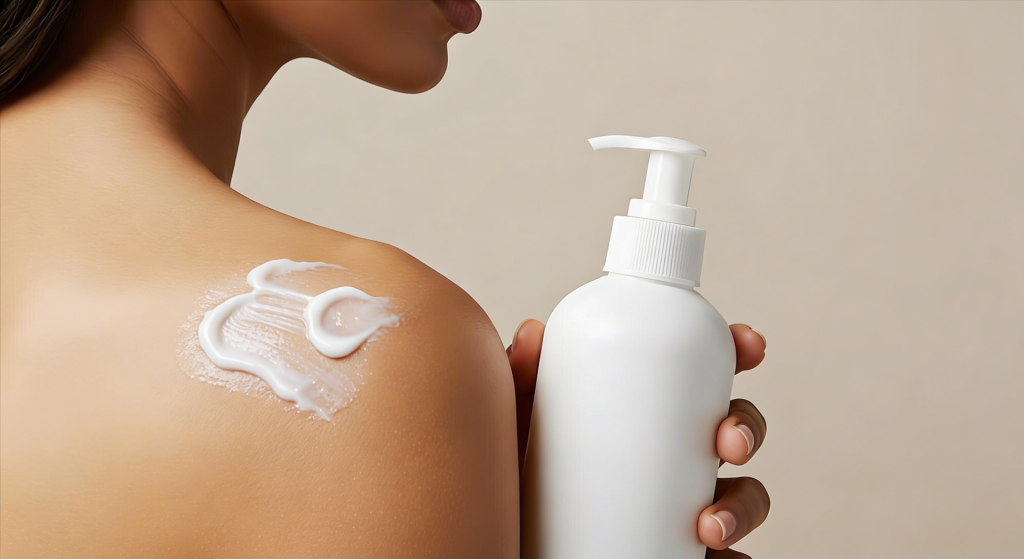
Body lotions are one of the most versatile formats in personal care. From a formulation point of view, most of them are oil-in-water (o/w) emulsions, designed to moisturize with a light, fast-absorbing texture. This structure allows the incorporation of vegetable oils and lipid-based actives that support skin comfort and barrier function, while not leaving a greasy feeling.At the same time, these unsaturated lipids are sensitive to oxidation. Exposure to oxygen, light, and trace metals can trigger radical chain reactions that progressively affect odor, color, and texture. In a market increasingly driven by clean-label expectations and naturally derived ingredients, ensuring oxidative stability without relying on synthetic antioxidants has become a central formulation objective.
Formulation Parameters for Body Lotions: Structure, Texture and Stability
An o/w body lotion relies on the dispersion of small oil droplets within a continuous aqueous phase. Emulsifiers, such as glyceryl stearates, fatty alcohols, or polymeric stabilizers, are responsible for maintaining this structure. Their selection influences droplet size, viscosity, and overall physical stability, but also plays a role in oxidative behavior.
In o/w emulsions, oxidation primarily occurs at the oil-water interface. Dissolved oxygen from the aqueous phase can migrate toward the lipid droplets, where unsaturated fatty acids form hydroperoxides that later break down into secondary oxidation products, including aldehydes associated with rancid off-notes. The large interfacial area typical of o/w systems makes this mechanism particularly relevant.
Droplet size distribution, interfacial charge, pH, and even the composition of the aqueous phase can influence oxygen diffusion and reaction rates. For this reason, ensuring stability is not simply a matter of selecting a strong emulsifier. It requires a holistic approach that integrates oil selection, antioxidant strategy, packaging, and controlled manufacturing conditions.
A well-designed body lotion protects its lipid phase without compromising texture or skin feel. Achieving that balance is key for brands aiming to deliver both performance and a premium sensorial profile.
Natural Antioxidants as Stabilizing Agents in Emulsion-Based Body Lotions
The move toward natural cosmetics has intensified interest in plant-derived antioxidants as alternatives to synthetic stabilizers. Polyphenols, flavonoids, and tocopherols are widely recognized for their capacity to interrupt radical chain reactions through hydrogen donation, electron transfer, or metal chelation.
In o/w emulsions, antioxidant performance depends not only on intrinsic radical-scavenging activity but also on phase distribution. Lipophilic antioxidants protect the oil droplets directly, where oxidation mainly occurs. Hydrophilic antioxidants can reinforce protection at the interface or within the aqueous phase. Combining both types often enhances overall stability.
Because natural ingredients may vary depending on origin and processing methods, working with standardized, high-quality antioxidant solutions is crucial to ensure consistent performance at an industrial scale.
Clean-Label Demands in the Personal Care Industry: Ingredient Transparency and Compliance
Clean-label expectations in cosmetics are evolving rapidly. According to Grand View Research, the clean beauty market is expected to grow at a Compound Annual Growth Rate (CAGR) of 14.8% from 2024 to 20230, reaching a market size of 21.29 billion USD [1]. The industry is characterized by a high degree of innovation, and brands are expected to justify every ingredient in terms of safety, origin, sustainability, and function. This trend has direct implications for body lotion formulation and antioxidant selection.
Many natural and organic certification standards restrict certain synthetic antioxidants and preservatives. As a result, formulators must include systems that maintain chemical stability using naturally derived solutions. Beyond compliance, ingredient transparency has become a competitive advantage. Recognizable, plant-based ingredients with sustainable sourcing narratives strengthen brand credibility and respond to growing environmental awareness.
Replacing Synthetic Antioxidants: Scientific and Regulatory Considerations
Replacing synthetic antioxidants with natural alternatives requires more than ingredient substitution. It demands technical expertise, application support, and a deep understanding of emulsion behavior. Collaborating with a specialized natural antioxidant manufacturer is, therefore, a strategic step.
Btsa’s Bioxan® range of natural antioxidants is specifically designed to protect cosmetic formulas against oxidation. Derived from tocopherols obtained from vegetable oil distillation, Bioxan® solutions provide effective stabilization while aligning with clean-label objectives.
Bioxan®’s lipophilic antioxidant profile allows direct protection of the dispersed oil phase, helping to reduce the formation of oxidation markers and preserve sensory attributes over time.
Beyond product performance, partnering with Btsa ensures access to over 30 years of experience in natural antioxidants and strong quality control standards. This integrated approach supports manufacturers in successfully replacing synthetic antioxidants, strengthening clean-label positioning, and enhancing the long-term stability and competitiveness of body lotion formulations.
Sources
[1] Grand View Research. Clean beauty market size, share & trends analysis report [Internet]. San Francisco (CA): Grand View Research; [cited 2026 Feb 24]. Available from: https://www.grandviewresearch.com/industry-analysis/clean-beauty-market-report