
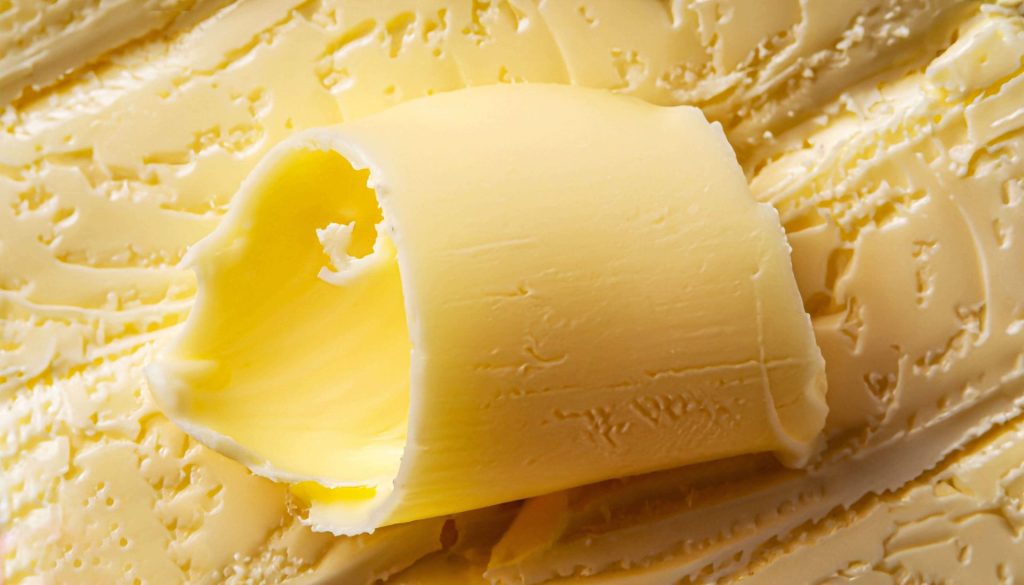
Margarine and fat-based spreads are a well-established product category in both household and industrial food markets. From a technical standpoint, they are water-in-oil (w/o) emulsions, a mixture of liquid vegetable oil, water, emulsifiers, and other minor ingredients. The high amount of oils differs fundamentally from the oil-in-water systems more commonly studied in lipid oxidation research. This distinction determines how oxidation occurs, how antioxidants distribute across phases, and what protective strategies are technically appropriate. As clean label pressure grows and regulatory scrutiny of synthetic additives increases, finding effective natural antioxidant solutions for these matrices has become a formulation priority.
Lipid Oxidation in Margarine: Mechanisms and Risk Factors
Lipid oxidation is the main deterioration process in margarine. The fat phase, typically 80% or more of the product, consists of a blend of vegetable oils such as corn, cottonseed, safflower, sunflower, rapeseed, soy, and palm oils. Each brings a different fatty acid profile and a different susceptibility to oxidative degradation.
Margarines based on oils with high polyunsaturated fatty acid (PUFA) content are particularly vulnerable. Free radicals trigger chain reactions that attack unsaturated fatty acids, forming hydroperoxides as primary oxidation products. These break down into aldehydes, ketones, and short-chain fatty acids, secondary products responsible for the rancid off-notes. These odors are a clear signal of deterioration and can also drive consumer rejection.
The fatty acid composition directly determines oxidative stability. Margarines with higher saturated fat content show longer Induction Periods (IP) in Rancimat testing, where the longer the induction time, the more stable the analyzed sample is. On the contrary, PUFA- rich formulations degrade faster [1]. But fatty acid profile is not the only variable. Metal ions, light, oxygen, temperature, emulsifier type, and minor ingredients such as citric acid, β- carotene, or NaCl can each accelerate or modulate the rate of oxidation [2].
The oil-water interface is where oxidation is most active. Emulsifiers stabilize this region but also influence how easily oxidants reach the lipid substrate. Research shows that even the fatty acyl chain of the emulsifier itself can introduce oxidative risk [2].
Impact of Natural Antioxidants on Shelf Life and Nutritional Profile
Interest in plant-derived antioxidants as replacements for BHA and BHT has grown significantly. Both synthetic compounds raise safety concerns, with evidence linking them to endocrine disruption, carcinogenicity, and metabolic disorders [1]. Natural alternatives have demonstrated real capacity to extend the oxidative stability of margarines without affecting sensory attributes.
Among botanical sources, rosemary is the most consistently effective. Studies adding natural herb powders to commercial margarines found that rosemary increased the average IP value by nearly 70% across all tested formulations [1]. Its performance is explained by its high content of lipophilic phenolic compounds such as carnosic acid and carnosol, which are well-suited to act within the fat phase of w/o emulsions.
Tocopherols are among the most widely used natural antioxidants in fat-based food systems. Their performance in margarine, however, depends strongly on the homologue selected, its concentration, and its interaction with other ingredients. Its antioxidant efficacy in w/o emulsions is influenced by phase distribution. Combining tocopherols with synergistic co-ingredients such as ascorbyl palmitate or lecithin can further extend protection, which is why tailored formulation support is essential to achieve consistent results at an industrial scale.
Regulatory Landscape for Antioxidant Use in Margarine and Spreads
The use of antioxidants in margarine and fat-based spreads is governed in the European Union by Regulation (EC) No 1333/2008 on food additives. These products fall under category 02.2.2 (“Other fat and oil emulsions, including fat and oil emulsions for spreading and liquid emulsions”), which sets specific conditions for each permitted additive.
Synthetic antioxidants such as BHT (E 321) are authorised in this category at a maximum level of 100 mg/kg. Galates, TBHQ, and BHA (E 310-320) are permitted at up to 200 mg/kg, but only for frying fats, not for spreads or margarines in general.
Natural antioxidants have a clear place in this framework. Tocopherols (E 306-309), including tocopherol-rich extracts, α, γ, and δ-tocopherol, are listed under Group I, meaning they are authorised at quantum satis in all food categories where Group I additives are permitted. Rosemary extract (E 392) is specifically authorised in category 02.2.2 at a maximum level of 100 mg/kg.
This regulatory framework provides manufacturers with a well-defined pathway for replacing synthetic antioxidants with natural alternatives, while remaining fully compliant with EU food additive legislation.
Regulatory status alone, however, does not guarantee technical efficacy. Formulation decisions must integrate compliance with performance data from stability testing under real storage and processing conditions. Working with suppliers that provide application expertise significantly reduces the complexity of this transition.
Clean Label Strategies: Replacing Synthetic Additives Without Compromising Stability
Replacing synthetic antioxidants in margarine requires a system-level approach. The emulsion type, fatty acid composition, intended shelf life, packaging format, and processing conditions all influence which antioxidant solution will perform reliably at an industrial scale.
A few principles consistently guide effective clean-label design for these matrices. Antioxidant polarity must match the phase where oxidation is most active. In w/o emulsions, mixed systems addressing both the interface and the bulk oil phase tend to outperform single-ingredient solutions. Synergistic combinations with more polar antioxidants (ascorbyl palmitate, ascorbic acid, plant polyphenols) and suitable emulsifiers consistently deliver broader protection.
Btsa’s Tocobiol Blends® range is designed to address these challenges through customized antioxidant solutions that combine natural tocopherols with complementary active ingredients, including ascorbyl palmitate, rosemary extract, propyl gallate, and lecithin, to achieve synergistic protection tailored to each application. Effective at low doses and with no organoleptic impact, Tocobiol Blends® is specifically indicated for oils and margarines, among other fat-based food systems.
With over 30 years of experience in natural antioxidant development, Btsa supports manufacturers through formulation challenges of moving away from synthetic additives, helping strengthen both product stability and clean-label positioning.
Sources
[1] Serra JJ, Fagoaga C, Mura J, Sempere-Ferre F, Castellano G. Effectiveness of natural antioxidants on oxidative stability of margarines. LWT. 2024 Dec 15;214:116997. doi:10.1016/j.lwt.2024.116997
[2] Fruehwirth S, Egger S, Kurzbach D, Windisch J, Jirsa F, Flecker T, Ressler M, Reiner AT, Firat N, Pignitter M. Ingredient-Dependent Extent of Lipid Oxidation in Margarine. Antioxidants (Basel). 2021 Jan 13;10(1):105. doi: 10.3390/antiox10010105