
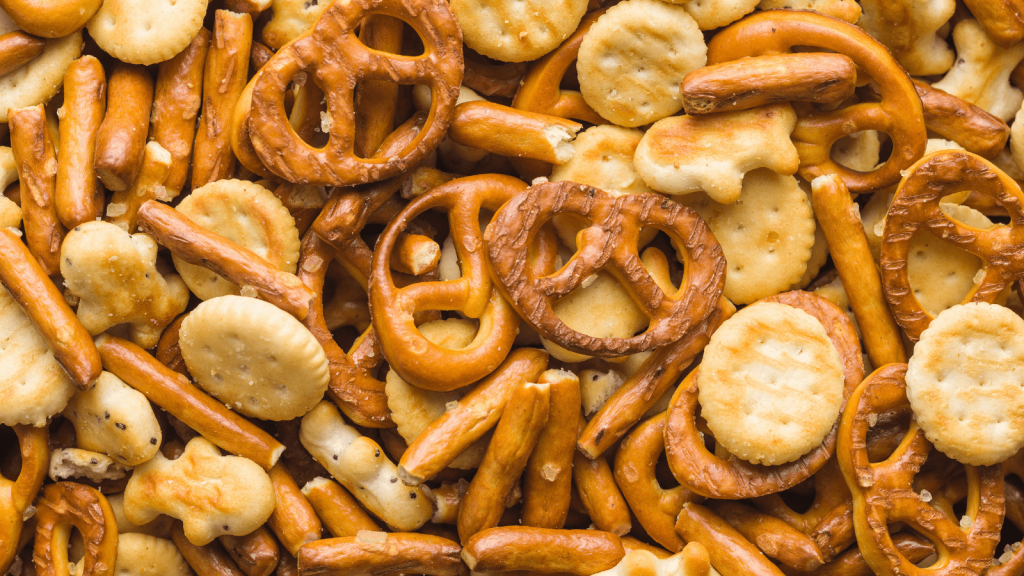
Today’s fast-paced lifestyles have led to a change in our eating habits. Ready-to-eat snacks have become increasingly popular, driven by convenience and on-the-go consumption habits. Crackers, granola bars, cookies, nuts, chips, and cereals belong to the category of low-moisture packaged snacks. While this property makes them microbiologically stable, it does not protect against chemical deterioration. In low-moisture snacks, lipid oxidation becomes the primary factor limiting shelf life, causing rancidity, off-flavor development, color changes, and nutritional loss.
Why Ready‑to‑Eat Foods Are Vulnerable to Oxidation and Quality Loss
Low-moisture packaged snacks are defined by two structural features: high fat content and low water activity (aw). Most products in this category have an aw below 0.4 and a moisture content between 2% and 4% [1].
The relationship between aw and lipid oxidation follows a counterintuitive pattern. According to the classical food stability model, oxidation rates are paradoxically high at very low aw . A possible hypothesis to explain this fact points to insufficient water to create a protective barrier, leaving lipids directly exposed to atmospheric oxygen. As aw increases toward 0.2–0.3, oxidation reaches its minimum: at this point, water forms a monomolecular layer around lipid molecules, acting as a physical shield against oxygen. Beyond this optimal range, as aw continues to rise, oxidation increases again because water begins to act as a solvent, enhancing the mobility of pro-oxidant catalysts such as transition metal ions [1].
However, this pattern does not apply universally to all snack products. Research on low- moisture crackers, for instance, showed a continuous decrease in oxidation rates as aw increased from 0.05 to 0.7, without the characteristic upturn at very low aw [2]. This variability underscores that predicting oxidative stability in low moisture snacks cannot rely on a single model; it requires understanding the specific behavior of each food matrix.
Fatty acid composition adds another layer of complexity. The food industry’s shift toward replacing saturated fats with polyunsaturated fatty acids (PUFAs) brings clear nutritional benefits but significantly increases oxidative risk. Ingredients common in snack formulations, such as whole grain flours, legume-based ingredients, or vegetable oils rich in linoleic and linolenic acid, therefore introduce both nutritional value and oxidative vulnerability into the same product.
Cooking, Packaging and Beyond: How Processing Affects Antioxidant Integrity
Thermal processing is both necessary and challenging for oxidative stability. High temperatures promote the characteristic flavors, colors, and textures that define snack products. Yet these same processes can initiate lipid oxidation before the product even reaches the shelf, and critically, degrade the endogenous antioxidants naturally present in the raw materials. Processing steps that incorporate air, such as dough mixing, further increase oxidative risk by creating new lipid-oxygen interfaces. Studies have shown that lipid oxidation occurs actively during the mixing and kneading stages in baked goods.
Tocopherols, carotenoids, and ascorbic acid found in ingredients such as whole grain flours or vegetable oils are susceptible to thermal degradation during processing. The result is a product that arrives in its final packaging with a reduced natural antioxidant capacity, making it more dependent on added antioxidant protection for the remainder of its shelf life.
Beyond processing, environmental conditions during storage and distribution represent an additional oxidative challenge. Temperature, light exposure, and oxygen concentration within the packaging headspace all significantly influence lipid oxidation rates in finished products. This means that even a well-formulated product can deteriorate rapidly if packaging and storage conditions are not carefully controlled.
Plant-Based Antioxidants in Ready-to-Eat Snacks: Efficacy, Stability, and Application
Among the strategies available to formulators to control lipid oxidation in ready-to-eat food products (ingredient quality, reformulation, and packaging), the use of antioxidants stands out for its efficacy, versatility, and cost-effectiveness.
Naturally derived antioxidants such as tocopherols (vitamin E), ascorbic acid, carotenoids, and plant polyphenols have demonstrated effectiveness in increasing oxidative stability in food systems, and they align with the growing consumer demand for clean-label products. Natural antioxidants interrupt the free-radical chain reaction that drives lipid autoxidation: by donating a hydrogen atom to the lipid peroxyl radical (LOO·), antioxidants convert it into a non-radical product, effectively halting propagation.
The efficacy of an antioxidant in a snack system depends on several factors beyond its intrinsic radical-scavenging capacity: its solubility profile, compatibility with the food matrix, stability under thermal processing conditions, and interaction with other formula components.
Natural Antioxidant Ingredients for RTE Snack Formulation: Selection and Application
Tocopherols are among the most widely used natural antioxidants. They stabilize unsaturated fatty acids and reduce the formation of hydroperoxides and secondary oxidation products. Their lipophilic profile makes them directly compatible with the fat matrix of crackers, cookies, chips, and nut-based snacks, without altering the sensory characteristics of the final product.
Btsa’s Tocobiol® is a natural antioxidant based on tocopherols derived from non-genetically modified vegetable oil, specifically developed to protect fat-based food systems and extend shelf life without modifying sensory attributes. Its protective action is enhanced by the synergy between its active components (tocopherols, squalene, and sterols), which are naturally present in the product.
As reformulation pressures push ready-to-eat snack manufacturers toward higher PUFA profiles, cleaner ingredients, and longer shelf lives, the role of natural antioxidant solutions becomes increasingly strategic. Incorporating Tocobiol® at the development stage allows formulators to preserve flavor integrity, protecting nutritional value, and ensuring consistent product quality throughout distribution and storage.
Sources
[1] Mora RL, Vanare SP, Pegg RB. Mechanisms, Causes, and Solutions: A Comprehensive Review of Lipid Oxidation in Low-Moisture Packaged Snacks. European Journal of Lipid Science and Technology. 2025;127:e70044.doi: 10.1002/ejlt.70044
[2] T. P. Labuza, L. McNally, D. Gallagher, J. Hawkes, and F. Hurtado, “Stability of Intermediate Moisture Foods. 1. Lipid Oxidation,” Journal of Food Science, 1972; 37: 154–159. doi: 10.1111/j.1365-2621.1972.tb03408.x