
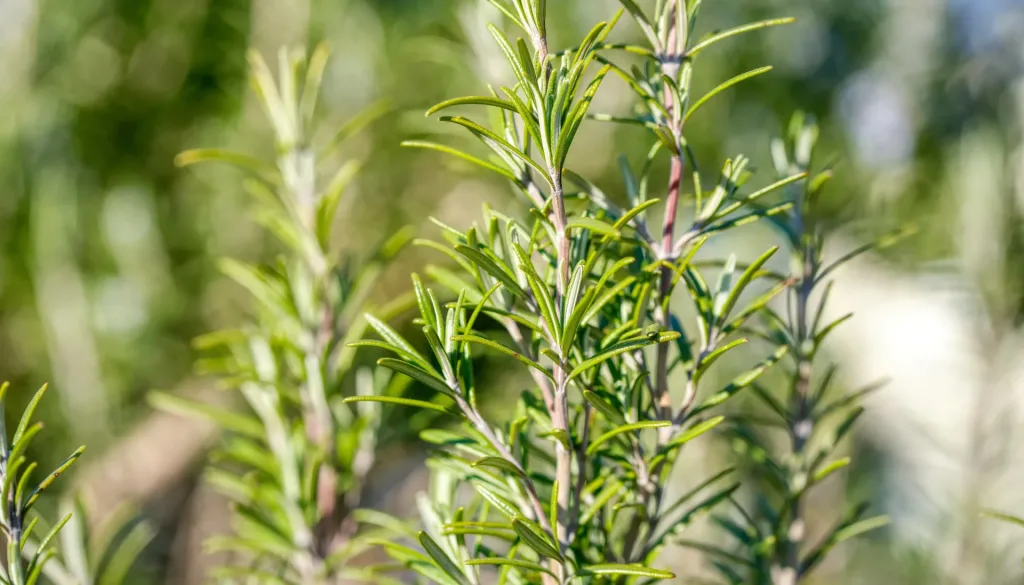
Few ingredients bridge tradition and technology as neatly as rosemary. Beyond its long history in culinary use, rosemary extract has established itself as a leading natural antioxidant in the food industry. Its ability to delay oxidative rancidity in fat-containing products adds to its recognizable, plant-derived profile for clean label formulation.
How Rosemary Extract Prevents Lipid Oxidation and Rancidity in Food Products
Rosemary extract is obtained from the leaves of Salvia rosmarinus (syn. Rosmarinus officinalis), a Mediterranean plant of the Lamiaceae family. Its antioxidant capacity is driven mainly by two phenolic diterpenes, carnosic acid and carnosol, which are recognized as the principal antioxidant compounds in rosemary extract [1].
Lipid oxidation typically proceeds as a free-radical chain reaction with three stages: initiation, propagation, and termination. Once radicals are formed, unsaturated fatty acids react with oxygen to form hydroperoxides (primary oxidation products), which then break down into secondary products such as aldehydes and ketones. These secondary compounds are responsible for the rancid notes, aroma loss, and color changes that limit the shelf life of fat-containing foods.
The phenolic diterpenes in rosemary extract interrupt this sequence. Acting as hydrogen-atom donors, they neutralize lipid free radicals and interrupt the propagation stage of the chain reaction, and they can also help chelate the trace metals that catalyze oxidation. Both carnosic acid and carnosol are lipid-soluble, so they distribute into the fat phase of a food, exactly where oxidation occurs.
Carnosic Acid and Carnosol: The Active Compounds That Make Rosemary Extract an Effective Antioxidant
Carnosic acid is regarded as the primary contributor to the antioxidant activity of rosemary extract. It behaves as a chemical scavenger of reactive oxygen species (ROS): when it neutralizes radicals such as singlet oxygen or hydroxyl radicals, it is progressively consumed and oxidized into a series of derivatives, including carnosol. A distinctive feature is its super-stoichiometric behavior: it can act repeatedly as a reducing agent by sequentially donating hydrogen atoms through a cascade of phenolic compounds formed from the rearrangement of the initially oxidized species.
Carnosol works through a different, complementary mechanism. It interferes with lipid peroxidation, blocking the propagation of the oxidation chain, and is more resistant to oxidative degradation than carnosic acid. Because the two diterpenes act at different stages of the oxidation process, their combination broadens the overall protective effect of rosemary extract and provides sustained stability over time.
Formulation Guidance: Solubility, Dosage and Processing Stability for Food Manufacturers
Carnosic acid and carnosol are oil-soluble and distribute into the lipid phase, so straight-oil systems call for an oil-soluble extract, while water-containing or emulsified systems can use an emulsifier to disperse the actives or a water-dispersible grade.
The extract is effective at low levels, with a common industrial range of roughly 0.05 to 0.5% and a dose-dependent effect. As performance depends on carnosic acid and carnosol content, a standardized ingredient is key to consistent results. It should be added as early as possible, ideally before oxidation begins, since early suppression delays the whole cascade. Both compounds perform well under typical processing and cooking temperatures, making them suitable for frying and baking. Rosemary has a characteristic aroma that
blends into robustly flavored products; for neutral matrices such as bland oils, unflavored extracts avoid any sensory impact [2].
To meet food industry needs, Btsa has developed Tocobiol® Rosemary, a natural antioxidant from Rosmarinus officinalis leaf extract, rich in carnosic acid and carnosol. Approved under E392, it protects oils, fats, and complex food systems against oxidative rancidity, offers high thermal stability, and preserves flavor, color, and aroma while supporting clean-label, allergen-free, and Non-GMO positioning. Its natural performance helps maintain freshness and sensory integrity in a variety of food applications while supporting consumer demand for
clean-label, plant‐derived ingredients.
Food Applications of Rosemary Extract: Fats and Oils, Meat, Bakery and Processed Foods
Rosemary extract protects a wide range of matrices:
- Frying oil and fried products: it lowers both primary and secondary oxidation products, slows down the polymerization of oil, and may help reduce acrylamide formation in certain fried food systems, although the magnitude of this effect depends on the formulation and processing conditions. They usually require deflavored rosemary extract, since high temperatures involved in the frying process can increase flavor impact. Polyunsaturated-rich oils, including fish oils, can also benefit from rosemary extract’s antioxidant capacity, thanks to its lipid oxidation reduction in omega-3 fatty acids.
- Meat and poultry: rosemary extract helps control lipid oxidation in rancidity-prone products, lowering secondary oxidation markers such as TBARS and hexanal. It can also delay the oxidation of myoglobin and other heme pigments, thereby reducing meat discoloration and helping preserve the desirable red appearance of fresh and processed products. These protective effects are primarily linked to the antioxidant activity of carnosic acid and carnosol and their ability to limit iron-mediated oxidative reactions.
- Bakery, snacks and nuts: it protects the lipid fraction against oxidation and stale notes; for nuts, dosing before roasting protects them through the heat step.
- Dressings, mayonnaise and emulsified sauces: the oil-soluble diterpenes protect the dispersed lipid phase, where oxidation mainly occurs. A great example in mayonnaise is the use of a deodorized rosemary extract. It kept peroxide values and hexanal below their quality-rejection thresholds throughout storage, matching or outperforming the synthetic chelator EDTA, while better preserving the product’s color and sensory acceptance [3].
Regulatory Status and Clean Label Positioning of Rosemary Extract (E392)
In the European Union, rosemary extract is authorized as food additive E392 under Regulation (EC) No 1333/2008, permitted as an antioxidant in 11 main food categories. Its maximum permitted levels range from 15 to 400 mg/kg, always expressed as the sum of carnosic acid and carnosol. Its specifications set carnosic acid and carnosol as the reference compounds, and the Joint FAO/WHO Expert Committee on Food Additives (JECFA)
established in 2025 an acceptable daily intake of 0–0.6 mg/kg body weight, expressed as their sum [4].
Beyond compliance, rosemary extract in food fits clean label strategies: a recognizable culinary ingredient that reads clearly on a label and a plant-derived alternative to synthetic antioxidants such as BHA, BHT, and TBHQ, which face growing scrutiny and declining acceptance. A standardized rosemary extract lets manufacturers remove synthetic additives while maintaining shelf life, protecting sensory quality and strengthening clean label
credentials.
With Tocobiol® Rosemary, Btsa provides a standardized, E392-approved rosemary extract designed to protect the fat phase, extend shelf life, and support clean label formulation.
Sources
[1] Nieto G, Ros G, Castillo J. Antioxidant and Antimicrobial Properties of Rosemary (Rosmarinus officinalis, L.): A Review. Medicines (Basel). 2018 Sep 4;5(3):98. doi: 10.3390/medicines5030098.
[2] Xie J, VanAlstyne P, Uhlir A, Yang X. A review on rosemary as a natural antioxidation solution. Eur J Lipid Sci Technol. 2017;119(6):1600439. doi:10.1002/ejlt.201600439.
3] Savani P, Puthiyedath A, Chandran K R, George S, Prasad PS, Annapure US. Evaluation of the sensory properties and antioxidant activity of clean rosemary extracts for an effective replacement of EDTA in mayonnaise. Appl Food Res. 2023;3(1):100302. doi:10.1016/j.afres.2023.100302.
[4] Joint FAO/WHO Expert Committee on Food Additives. Evaluation of certain food additives: 100th report of JECFA. WHO Technical Report Series 1058. Geneva: WHO; 2025.