
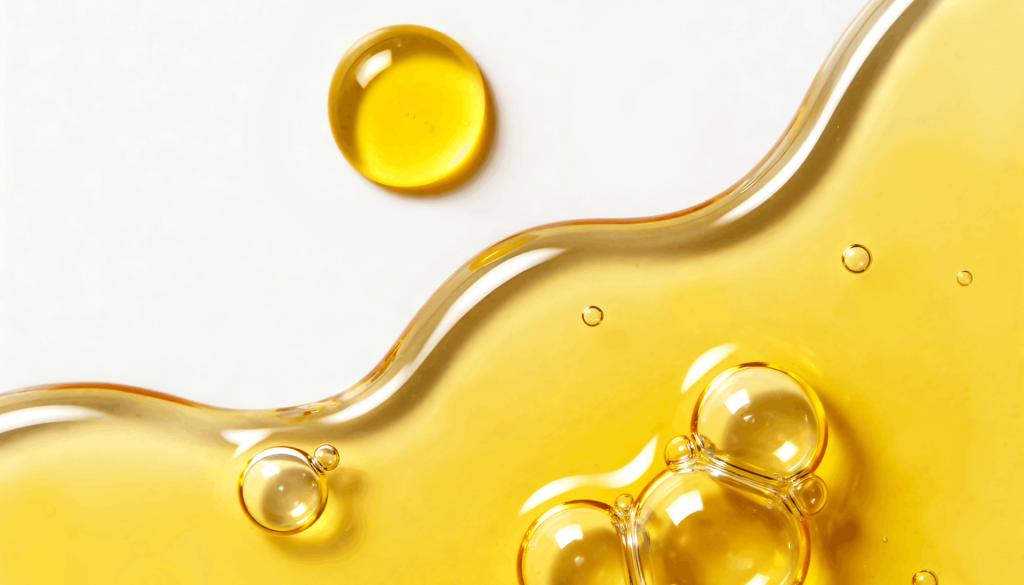
The global demand for oils rich in polyunsaturated fatty acids (PUFAs) continues to grow. Consumers and formulators alike seek out oils such as fish or algae for their recognized functional and nutritional benefits. Yet this same biochemical richness that makes high-PUFA oils valuable also makes them unstable. Managing oxidation in these matrices is critical to satisfy consumers’ expectations.
The solution lies in designing a protection system that is precisely tailored to the oil’s composition, intended application, and shelf-life requirements.
Designing Antioxidant Systems for High-PUFA Oil Matrices
Not all oils oxidize at the same rate or through the same mechanisms. The oxidative susceptibility of a lipid matrix is primarily governed by its fatty acid profile, specifically, the number and position of double bonds in the carbon chain. Oils rich in EPA and DHA, such as nutritionally appealing fish and algae oils, sit at the end of this spectrum and can deteriorate quickly under unfavorable conditions.
This chemical variability means that antioxidant system design must begin with a precise characterization of the oil matrix. Key parameters include the degree of unsaturation, the natural tocopherol content, the presence of pro-oxidant metals, water activity, and the intended processing and storage conditions. The efficacy of an antioxidant is determined by the combination of its chemical reactivity, its physical properties, and its interaction with other compounds present in the product.
Tocopherols are the most widely used antioxidants on the industrial scale for lipid protection. They donate a phenolic hydrogen atom to lipid peroxyl radicals, interrupting the propagation phase of oxidative degradation. However, the efficacy of a tocopherol-based system depends strongly on the homologue selected. In pure chemical terms, ⍺-tocopherol is generally considered the most reactive, followed by β-, Ɣ-, and δ-tocopherol. However, in vitro results across different oil systems do not always follow this theoretical ranking: the effectiveness of each isoform in bulk oils or emulsions is highly dependent on the specific matrix, concentration, and surrounding molecules [1].
Dose Optimization and Pro-Oxidant Threshold Effects
One of the most critical aspects of tocopherol application is concentration management. The relationship between tocopherol dose and antioxidant efficacy is not linear. At low concentrations, tocopherols function effectively as radical scavengers. At high concentrations, however, they can exhibit pro-oxidant behavior.
Not all tocopherol isoforms exhibit the same pro-oxidant tendency. Ɣ- and δ-tocopherol show a weaker pro-oxidant tendency compared to ⍺-tocopherol, due to their lower metal-reduction capacity and their ability to form dimerizable compounds that retain antioxidant activity.
The threshold at which this inversion occurs is system-dependent and remains difficult to predict universally. A recent article analyzing data from multiple studies suggests that below approximately 200 ppm, tocopherols exhibit almost exclusive antioxidant activity; beyond that concentration, activity frequently switches to pro-oxidant, except at very low levels of initial oil oxidation [1].
This does not establish a fixed safe limit; the effective window varies with oil type, isoform, oxygen availability, temperature, and the presence of co-antioxidants. It also highlights the importance of concentration optimization rather than maximization. Not always does the more mean better when talking about tocopherols.
For formulators, this has a direct practical implication. A rigorous dose-response evaluation, carried out under conditions representative of real-world storage and processing, is essential. Accelerated oxidation testing methods such as the Rancimat test, combined with peroxide value and anisidine value measurements over time, provide reliable data to define the effective and safe concentration window for each application.
Synergistic Antioxidant Strategies in Clean-Label Formulation
Building synergistic combinations that target multiple points in the oxidative cascade is an effective and technically sound approach to boost tocopherol activity. These synergistic effects arise through three main mechanisms:
- Acting alongside tocopherols, sharing the oxidative load and preventing their premature consumption.
- Chemically restoring oxidized tocopherols to their active form effectively extends their protective capacity.
- Chelating the metal ions that trigger the oxidative process at earlier stages, reducing the number of radicals that tocopherols ultimately need to intercept.
This third mechanism is particularly relevant in high-PUFA oils. Trace metals such as iron and copper are among the most potent initiators of lipid oxidation: even at very low concentrations, they accelerate the breakdown of existing oxidation products into new reactive species, rapidly amplifying the oxidative cascade. By incorporating metal chelators, this initiating activity is suppressed before it begins, a strategy that produces a combined protective effect greater than either ingredient could achieve independently.
From a regulatory and market perspective, clean-label demands add another dimension to antioxidant system design. Formulators increasingly need to demonstrate that their stabilization strategy relies on naturally derived, recognizable ingredients, without sacrificing performance.
Btsa has developed Tocobiol Blends®, a customized antioxidant solution that combines natural tocopherols with complementary ingredients, including ascorbyl palmitate, lecithin, propyl gallate, or rosemary extract, specifically designed to achieve the synergistic effects described above. Each formulation is tailored to the specific needs of the application, seeking the combination that maximizes antioxidant capacity at the lowest effective dose, without organoleptic impact.
For high-PUFA oil matrices, Tocobiol Blends® offers a technically grounded and customizable solution to extend shelf life and preserve product quality throughout the distribution chain.
Sources
[1] Barouh N, Bourlieu-Lacanal C, Figueroa-Espinoza MC, Durand E, Villeneuve P. Tocopherols as antioxidants in lipid-based systems: The combination of chemical and physicochemical interactions determines their efficiency. Compr Rev Food Sci Food Saf. 2022;21:642–688. https://doi.org/10.1111/1541-4337.12867