
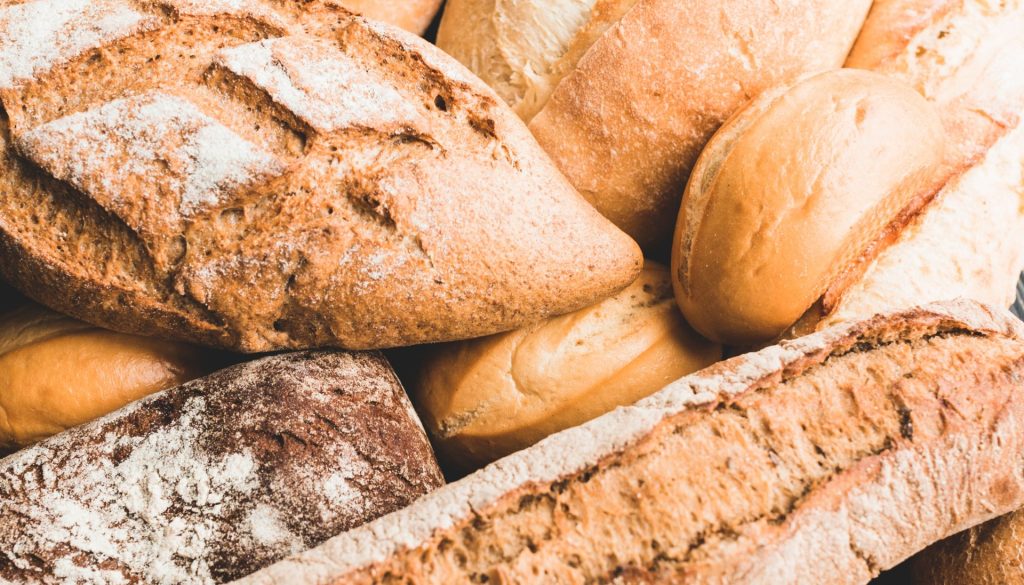
Fat is an essential component of bakery products: it imparts taste, texture, and palatability, and improves their appearance. But they do not come without liabilities. Fats are susceptible to oxidation, which leads to the development of rancidity and off-flavors during storage. Controlling this slow oxidative deterioration is central to product quality. As consumer demand shifts away from synthetic additives, natural antioxidants have become the preferred route to protect these systems while supporting clean, recognizable formulations.
Oxidation in Bakery Products: Causes, Impact and Formulation Constraints
Oxidative deterioration of lipids is a free-radical chain reaction that proceeds through three stages: initiation, propagation, and termination. The primary products, lipid hydroperoxides, are themselves odorless and tasteless, but they decompose into secondary products responsible for the characteristic off-flavors of rancid baked goods.
Several factors govern how fast this happens, and they fall into two groups.
- The first is formulation composition: fats with a higher proportion of unsaturated fatty acids oxidize more readily than more saturated ones (and melting makes polyunsaturated fatty acids more accessible); whole grains and endogenous enzymes such as lipase and lipoxygenase add further oxidative load; and pro-oxidant metals such as iron and copper enter through ingredients like iron-fortified flour or nuts.
- The second is processing and storage conditions: the large surface area exposed to air, mixing that incorporates oxygen, heat, and light-induced photooxidation, all accelerate the reaction.
The formulation constraint is clear. Synthetic antioxidants such as BHA and BHT offer excellent carry-through and contribute little flavor, but animal studies have associated some of them with toxigenic, mutagenic, and carcinogenic effects, fueling the move toward natural alternatives.
Natural Antioxidants in Bakery Applications: Sources, Functionality and Compatibility
Natural antioxidants already used in bakery products include tocopherols, β-carotene, and ascorbic acid, alongside plant extracts from rosemary, thyme, sage, mint, and cinnamon, and ingredients such as rice bran, mango peel, grape marc, and green tea. They work by terminating the free-radical chain, donating hydrogen atoms or electrons to convert reactive radicals into stable products.
Tocopherols are the major natural antioxidants in vegetable and animal fats. They are fat- soluble and, importantly for baking, show good carry-through in baked and fried products. Their relative activity is temperature dependent: at physiological temperatures, α-tocopherol shows the highest activity, and the order follows as β > γ > δ, but at the higher temperatures of 50-100 °C, this order reverses. Tocopherols also function synergistically with other antioxidants and synergists such as ascorbic acid, ascorbyl palmitate, lecithin, and citric acid.
Compatibility comes down to phase distribution. Lipid-soluble antioxidants distribute within the fat phase, exactly where oxidation occurs, and uniform distribution is essential to maximize protection. For neutral-flavored products, deodorized extracts or inherently neutral options such as tocopherols are preferable to strongly flavored spice extracts.
Thermal Stability of Antioxidants: How Baking Affects Their Efficacy
The stability of natural antioxidants can be compromised during processing, and behavior under baking conditions (typically 160-180 °C) varies considerably by compound. Some plant extracts show no loss of activity after short bakes, and a large share of mango-peel polyphenols is retained, while green tea catechins are only slightly reduced.
Among the vitamins, results diverge sharply. Vitamin E losses after breadmaking are close to 30%, attributed both to direct oxygenation during dough making and to heat destruction during baking; the more stable α-tocopheryl acetate, by contrast, retained around 96% in proofed dough with no further loss during baking and seven days of storage. Carotenoids are hit hardest, with losses driven by lipoxygenase activity during kneading, and β-carotene baking losses of 20-30% [1].
Application Guidance: Dosage, Format and Processing Considerations for Bakery Formulators
An antioxidant for baked foods should meet several requirements:
- Low toxicity
- No negative effect on odor, flavor, or appearance
- Efficacy at low concentrations
- Stability at high temperatures
- Solubility or dispersibility in the end product
Format and incorporation matter as much as dose. Adding the antioxidant to the lipid phase rather than directly to the dough improves distribution and concentrates protection where oxidation occurs. Processing choices reinforce this: minimizing oxygen incorporation during mixing and managing pro-oxidants such as metals reduces the oxidative load, while light- and oxygen-barrier packaging extends the protection that antioxidants provide.
In practice, this points to a fairly specific ingredient profile: a natural antioxidant that is fat-soluble, heat-stable enough to carry through baking, neutral in flavor and color, and easy to disperse into the fat phase.
This is precisely the profile Btsa addresses with its range of natural antioxidants, including natural tocopherols. Tocobiol® is a natural antioxidant made from tocopherols from non-GMO vegetable oil. It is ideal for protecting food and increasing its shelf life, preserving the freshness and sensory quality of the product. Tocobiol® is a 100% natural antioxidant developed exclusively by BTSA, and is a unique product on the market. It protects the color and odor of the final product and shows very good dispersibility. By stabilizing the lipid phase from within, it helps bakery formulators extend shelf life and preserve nutritional quality while meeting clean-label expectations.
The range also adapts to the specific constraints discussed above. For formulators who need to enrich with vitamin E, Tocobiol® E is available in different concentrations, from 1000 to 1300 international units, as well as in ester forms for products requiring greater stability (Acetate). And where added robustness or a synergistic system is needed, Tocobiol® Blends combine natural tocopherols with complementary ingredients such as ascorbyl palmitate, lecithin, or rosemary extract, mirroring the antioxidant-synergist combinations that perform well in baked systems.
Sources
[1] Nanditha B, Prabhasankar P. Antioxidants in bakery products: a review. Crit Rev Food Sci Nutr. 2009 Jan;49(1):1-27. doi: 10.1080/10408390701764104.